Pillow Firmness and Body Size: What to Consider
Choosing pillow firmness is not only a matter of personal taste. Your body size, shoulder width, sleeping position and mattress can all influence how much support feels comfortable through the night. A pillow that feels supportive for one person may feel too low, too firm or insufficiently stable for another.
The goal is not to find the hardest pillow available. It is to create a comfortable sleeping position in which your head and neck remain reasonably aligned with your spine, without forcing your head upward or allowing it to drop toward the mattress. Body size provides a useful starting point, but it should be considered alongside shape, filling, loft and the way you actually sleep.
For more practical detail, see our New Pillow Smell: What to Consider Before Sleeping on It.
To check current price, availability and purchase terms, see the Derila Ergo offer.
For more practical detail, see our Signs You Need a New Pillow: How to Tell When Support Is Wearing Out.
For more practical detail, see our Best Pillow Characteristics for Back Sleepers: A Practical Guide.
For more practical detail, see our How Sleeping Position Can Influence Pillow Firmness.
This guide explains how to assess those factors without treating body weight or build as a rigid formula. Small adjustments to pillow height, firmness or placement may make a noticeable difference to everyday comfort.
Key takeaways
- Larger body frames and broader shoulders may need more stable support, especially for side sleeping.
- Body weight alone does not determine the right firmness. Shoulder width, mattress softness and sleeping position also matter.
- Side sleepers often need more height than back sleepers, while stomach sleepers commonly need a lower, more flexible pillow.
- A firm pillow is not automatically a supportive pillow. The correct choice should support alignment without creating pressure.
- If discomfort is persistent, severe or accompanied by other symptoms, speak with an appropriate healthcare professional rather than relying on pillow changes alone.

Table of Contents
- Why body size matters when choosing a pillow
- Firmness and height are different
- How sleeping position changes the equation
- Consider your mattress and shoulder width
- A practical way to match firmness to your build
- Signs your pillow may be too soft or too firm
- How to adjust to a new pillow
- Frequently asked questions
Why body size matters when choosing a pillow
When you lie down, the pillow fills the space between your head and the mattress. The size of that space varies from person to person. A broad-shouldered side sleeper, for example, may have a larger gap to fill than a smaller-framed person sleeping in the same position. If the pillow is too low, the head may tilt toward the mattress. If it is excessively high, the head may be pushed away from the mattress instead.
Body size is best understood as a group of related characteristics:
- Shoulder width: this is particularly relevant for side sleepers because the shoulder creates distance between the head and mattress.
- Body frame: a larger frame may benefit from a pillow with greater structural stability, although this does not always mean maximum firmness.
- Head size: this can affect how deeply the head settles into a pillow and how much loft remains underneath.
- Weight distribution: the way your body presses into the mattress and pillow can influence how quickly a softer material compresses.
These factors should guide your testing, not dictate a fixed answer. Two people with similar body weights may need different pillows because they sleep in different positions or use mattresses with different levels of give.
Firmness and height are different
Firmness describes how resistant a pillow feels when you press into it. Height, often called loft, describes how high the pillow keeps your head. The two qualities are related but not interchangeable.
A tall pillow can be soft and compress significantly under your head. A low pillow can be firm and maintain its shape. For this reason, replacing a pillow with a firmer model does not necessarily solve a problem caused by insufficient height. Likewise, choosing a taller pillow may create excessive elevation if the real issue is that your current pillow collapses too easily.
For larger or broader sleepers, a pillow with moderate firmness and good shape retention may be more useful than an extremely hard pillow. It can provide stability while still allowing enough cushioning around the head. A smaller-framed sleeper may prefer a lower profile or a more compressible material, particularly when sleeping on the back or stomach.
For reliable supporting context on this point, see Sleeping Posture — UCLA Ergonomics.
When comparing pillows, ask two separate questions: “Does this pillow keep enough height under my head?” and “Does it feel stable without creating pressure?” Answering both is more useful than judging firmness by touch alone.
How sleeping position changes the equation
Side sleeping
Side sleeping usually creates the greatest need for height because the pillow must bridge the distance between the outside of the shoulder and the side of the head. A broader-shouldered person may need more loft or a more supportive construction to prevent the head from angling downward.
However, a very firm or tall pillow can press into the side of the face or push the neck upward. A useful starting point is a pillow that fills the shoulder-to-head gap while keeping the nose roughly in line with the centre of the chest, rather than pointing toward the mattress or ceiling.
Back sleeping
Back sleepers generally need less height than side sleepers because the shoulders do not create the same gap. A medium or moderately supportive pillow may help keep the head from tipping too far forward, while a pillow that is too high can make the neck feel flexed.
Body size still matters, but it may influence firmness more than height. A larger sleeper who sinks more deeply into a soft mattress may need a different pillow profile from a smaller sleeper on a firm mattress.
Stomach and combination sleeping
Stomach sleeping usually places the head in a rotated position, so a high, rigid pillow may feel uncomfortable. Many stomach sleepers prefer a low, flexible pillow, although personal comfort varies. Combination sleepers need a compromise: a pillow that can accommodate changes in position without feeling excessively high when they roll onto their back.
For a fuller comparison of how sleeping position affects support, see the guide on how sleeping position can influence pillow firmness.
Consider your mattress and shoulder width
Your pillow does not work in isolation. A soft mattress allows the shoulder and upper body to sink more deeply, reducing the distance between the head and mattress. A firm mattress may leave the body higher, increasing the amount of pillow height needed in some positions.
This is especially noticeable for side sleepers. On a soft mattress, a pillow that felt appropriate in a showroom may feel too tall at home. On a firm mattress, the same pillow may feel too low because the shoulder does not sink as far.
Shoulder width is another useful measurement. Lie on your usual mattress in your usual sleeping position and ask someone to observe whether your head appears level with your spine. A simple photograph taken from behind, with your neck relaxed, can also reveal whether your head is tilting toward or away from the mattress. The image is only a practical reference, not a medical assessment.
Mattress firmness can also change how much pressure you feel. A very firm sleep surface may make a firm pillow seem less forgiving, while a softer mattress may make a soft pillow lose support more quickly.

A practical way to match firmness to your build
Use the following process when comparing pillows:
- Start with your main sleeping position. If you change positions, begin with the one you use for the longest part of the night.
- Assess your shoulder-to-head space. Side sleepers with broader shoulders often need more loft, while back and stomach sleepers commonly need less.
- Consider how deeply you sink into the mattress. A softer mattress reduces the gap; a firmer mattress may increase it.
- Look for controlled compression. The pillow should yield enough to feel comfortable but recover enough to prevent your head from sinking out of alignment.
- Check the edges and centre. Some shaped pillows have different support zones. Make sure the area supporting your head remains comfortable when you move.
- Allow a short adjustment period. A new shape or material can feel unfamiliar at first. Evaluate comfort over several nights rather than making a decision after a few minutes.
As a general guide, smaller-framed back or stomach sleepers may prefer a lower, softer-to-medium feel. Medium or larger-framed back sleepers may prefer moderate support with controlled compression. Side sleepers, particularly those with broad shoulders, may need a higher and more stable pillow. These are starting points, not guarantees.
Do not use body size as a reason to choose the firmest available option. Excess firmness can create pressure around the ear, jaw or shoulder and may make it harder to settle into a natural position.
Signs your pillow may be too soft or too firm
A pillow may be too soft if your head sinks noticeably, the pillow flattens during the night or you repeatedly fold it to create more height. Side sleepers may notice that their head drops toward the mattress. Back sleepers may feel that the pillow provides little resistance when they change position.
For reliable supporting context on this point, see The individualized optimal pillow height and neck support design for side sleepers — PubMed.
A pillow may be too firm or too high if your head is pushed forward or sideways, your neck feels held in one position, or you wake with pressure around the ear, jaw or shoulder. A pillow that feels supportive for a few minutes but becomes uncomfortable after lying on it for longer may also be too rigid for your body and position.
Morning stiffness does not prove that a pillow is the sole cause. Sleep position, mattress condition, activity, stress and existing health issues can all contribute. If discomfort continues despite reasonable adjustments, consult a healthcare professional. The same applies to numbness, weakness, severe pain or symptoms that spread into an arm.
For more practical detail, see our Persistent Neck Discomfort: When to Speak With a Professional.
How to adjust to a new pillow
Changing from a very soft, flat pillow to a supportive contour or ergonomic design can feel unusual even when the height is suitable. Give yourself time to learn the new shape rather than immediately adding extra layers underneath it.
- Use the pillow in your normal sleeping position and keep the mattress setup consistent.
- Place your head in the intended centre or support zone instead of resting on the edge.
- Remove spare pillows that change the angle of your neck unless they are deliberately part of your setup.
- Try small changes, such as adjusting the pillow’s position under the neck or shoulders, before deciding that the firmness is wrong.
- Keep a brief note of how the pillow feels at bedtime and on waking for several nights.
If the pillow remains uncomfortable after a reasonable adjustment period, the issue may be its height, shape or material rather than firmness alone. A pillow should support a relaxed position, not require you to brace your neck against it.
Frequently asked questions
Do heavier people always need a firmer pillow?
No. Body weight can affect how much a pillow compresses, but shoulder width, sleeping position, mattress firmness and personal comfort are also important. A stable medium-firm pillow may work better than a very firm pillow that creates pressure.
What firmness is best for a broad-shouldered side sleeper?
A broad-shouldered side sleeper often benefits from enough height and structure to fill the shoulder-to-head gap. Start with a supportive pillow that does not collapse completely, then check that the head is not being pushed upward or allowed to fall toward the mattress.
Can a pillow be too firm even if it keeps my head aligned?
Yes. Alignment is only one part of comfort. Excessive firmness may create pressure around the face, ear, jaw or shoulder. Look for a balance between stable support and enough cushioning to allow the head and neck to relax.
Should smaller people choose a soft pillow?
Not necessarily. A smaller-framed person may need less height or a pillow that compresses more easily, but sleeping position and mattress feel still matter. A soft pillow that loses its shape may provide less useful support than a lower-profile pillow with moderate stability.
When should I ask a professional about discomfort?
Seek professional advice if discomfort is persistent, severe, worsening or accompanied by symptoms such as numbness, weakness or pain spreading into an arm. Pillow adjustments may improve comfort, but they are not a substitute for assessment of ongoing symptoms.
New Pillow Smell: What to Consider Before Sleeping on It
Opening a new pillow can come with an unexpected odour. It may smell faintly chemical, plasticky, earthy or like packaging. For some people, the scent fades quickly. For others, it is strong enough to make the pillow uncomfortable to use on the first night.
A new pillow smell is usually related to the materials, packaging or manufacturing process rather than a sign that something is wrong. Foam pillows, synthetic fills, protective coverings and sealed packaging can all contribute. Still, the sensible approach is not to ignore a strong or irritating odour: give the pillow time to air out, follow the care instructions and pay attention to how you feel around it.
For more practical detail, see our How to Choose a Pillowcase for a Contour Pillow.
To check current price, availability and purchase terms, see the Derila Ergo offer.
For more practical detail, see our Best Pillow Characteristics for Back Sleepers: A Practical Guide.
For more practical detail, see our Signs You Need a New Pillow: How to Tell When Support Is Wearing Out.
For more practical detail, see our How Sleeping Position Can Influence Pillow Firmness.
This guide explains what may cause the smell, how to reduce it without damaging the pillow and when it makes sense to contact the seller or a healthcare professional.
For more practical detail, see our Persistent Neck Discomfort: When to Speak With a Professional.
Key takeaways
- A new pillow smell can come from foam, textile treatments, packaging or compounds released into the surrounding air.
- Unpack the pillow in a well-ventilated room and allow it to air out according to the manufacturer’s instructions.
- Do not mask the odour with perfume, essential oils or harsh cleaning products.
- A smell that remains strong, worsens or causes irritation is a reason to pause use and contact the manufacturer or retailer.
- People with asthma, fragrance sensitivity or other respiratory concerns may prefer extra ventilation and a longer airing period.

Table of Contents
- Why do new pillows smell?
- Is a new pillow smell normal?
- How to air out a new pillow
- What not to do when removing the smell
- When should you wait before sleeping on it?
- When to contact the seller or stop using the pillow
- How to choose a pillow if odour matters to you
- Frequently asked questions
Why do new pillows smell?
The smell of a new pillow can have several sources, and the exact cause depends on its materials and packaging. A pillow containing polyurethane or other types of foam may release a noticeable odour when first removed from a sealed bag. This is sometimes called off-gassing. Synthetic fabrics, adhesives, dyes, finishes and plastic packaging may also contribute to the scent.
Packaging can make the smell seem stronger because the pillow may have been enclosed for days or weeks with little air movement. Compression packaging can also trap odours inside the material until the pillow expands and is exposed to fresh air.
The US Environmental Protection Agency explains that volatile organic compounds, or VOCs, can affect indoor air quality and may be emitted by many household products and materials. That does not mean every new pillow is hazardous, nor does smell alone tell you the level or identity of any emission. Odour is simply a reason to ventilate the room and follow the product’s instructions rather than placing the pillow straight on your bed.
Some smells are less about off-gassing and more about storage. A pillow may pick up a warehouse, cardboard or plastic scent. A damp or musty smell, however, deserves more caution because it can indicate exposure to moisture during storage or transport.
Is a new pillow smell normal?
A mild, temporary smell can be normal for a newly manufactured or newly packaged pillow. It should generally become less noticeable with ventilation and time. The duration varies according to the pillow’s construction, the packaging, room temperature, airflow and your own sensitivity to odours.
There is no universal number of hours that applies to every pillow. Instead of relying on a fixed timetable, check whether the smell is clearly fading and whether the product looks and feels as described by the manufacturer. A pillow that expands normally and gradually loses its packaging scent is different from one with a persistent, harsh or unusual odour.
For reliable supporting context on this point, see Volatile Organic Compounds' Impact on Indoor Air Quality.
Remember that “normal” does not have to mean comfortable for you. Even a mild smell may bother someone who is sensitive to fragrances or certain materials. If the odour interferes with sleep, causes a headache, irritates your throat or makes breathing feel uncomfortable, do not force yourself to use the pillow just because it is new.
How to air out a new pillow
Ventilation is usually the simplest first step. The aim is to replace trapped packaging air with fresh air while keeping the pillow clean and dry.
1. Read the care and unpacking instructions
Before removing tags or washing a cover, check the manufacturer’s instructions. Some pillows have a removable washable cover, while the inner pillow may not be washable. Instructions may also specify how long a compressed pillow needs to regain its shape or whether it should be kept away from direct heat.
2. Open the packaging in a ventilated area
Choose a dry room with good airflow, preferably near an open window. If outdoor conditions are suitable, you may place the pillow in a clean, sheltered area outside for a short period. Keep it away from rain, damp surfaces, smoke, strong fragrances and direct sunlight unless the manufacturer specifically allows sun exposure.
3. Give the pillow space
Lay the pillow flat or position it as directed, with air able to circulate around it. Do not leave it tightly folded, under bedding or inside another bag. If it arrived compressed, gently allow it to expand rather than aggressively pulling or twisting it.
4. Turn it occasionally
After several hours, turn or reposition the pillow if the care instructions permit. This can expose different surfaces to moving air. Avoid vigorous shaking if the filling could be displaced or damaged.
5. Check the smell before putting on a pillowcase
A pillowcase can reduce direct contact with the material, but it may also trap the odour. Check the pillow first. If the smell is still strong, continue airing it out rather than making the bed and hoping the scent disappears overnight.
| Situation | Practical response |
|---|---|
| Mild packaging smell that is fading | Continue ventilating and follow the care instructions. |
| Strong smell in a closed room | Move the pillow to a well-ventilated, dry area. |
| Musty or damp smell | Pause use and contact the seller for advice. |
| Odour causes irritation | Stop using it, get fresh air and seek advice if symptoms persist. |
What not to do when removing the smell
Trying to eliminate an odour quickly can create new problems. Do not spray perfume, air freshener or essential oils directly onto the pillow. These products can add their own fragrance, stain the fabric or cause irritation. They may also make it harder to identify the original smell.
Do not wash or soak the entire pillow unless the instructions clearly say that it is washable. Foam can retain moisture, lose its shape or take too long to dry. A damp interior may create a more persistent musty odour. If only the cover is washable, remove and clean the cover as directed while keeping the inner pillow dry.
It is also best to avoid hairdryers, radiators, heaters and prolonged intense sunlight. Excessive heat may affect foam, fibres, adhesives or the pillow’s shape. Fresh air and patience are safer than using heat to speed up the process.
Finally, do not place the pillow in a child’s or pet’s sleeping area while it still has a strong smell. Ventilation is especially useful when several people share a bedroom or when someone in the household is sensitive to odours.

When should you wait before sleeping on it?
Wait if the smell is strong enough to distract you, remains concentrated inside the pillowcase or has not started to fade after a reasonable airing period. You should also wait if the pillow feels unusually damp, sticky or warm after unpacking, or if it has not returned to its intended shape.
There is no benefit in enduring an unpleasant first night. A new pillow is meant to improve sleeping comfort, and a strong odour can make it harder to relax. Use your existing pillow temporarily if it is still supportive and comfortable, while the new one airs out.
People with asthma, known fragrance sensitivity or respiratory concerns may wish to be more cautious. Keep the room ventilated, avoid direct exposure and consider asking a healthcare professional for individual advice if particular materials or odours have caused problems before.
When to contact the seller or stop using the pillow
Contact the retailer or manufacturer if the smell is unusually strong, does not gradually improve, resembles dampness or solvent, or is accompanied by visible staining, wetness, damage or a damaged package. Ask about the material, recommended airing procedure and whether the product may have been exposed to moisture.
For reliable supporting context on this point, see Consumer Connection: Winter 2017.
Stop using the pillow if it causes burning eyes, throat irritation, coughing, wheezing, skin irritation, dizziness or another concerning reaction. Move away from the source and get fresh air. If symptoms are severe, do not improve or affect breathing, seek appropriate medical help promptly.
A product return or replacement may be appropriate if the pillow does not match its description or remains unusable because of its odour. Keep the packaging, order details and photographs of any visible issue until the matter is resolved. Avoid washing or altering the pillow before contacting the seller if doing so could affect the return terms.
How to choose a pillow if odour matters to you
If you are particularly sensitive to smells, investigate the product before ordering. Look for clear information about the filling, cover, packaging, washing instructions and expected expansion. A removable, washable cover may be useful, although it will not necessarily remove an odour from the inner pillow.
Check the retailer’s current policy for returns and contact details. A transparent seller should be able to explain what materials are used and how the pillow should be aired after delivery. Be cautious of descriptions that make broad safety promises without identifying the materials or care requirements.
Your sleeping position and support needs still matter. A pillow that has little odour but is too high, too low or too soft may be less comfortable than one that needs a short airing period. Once the smell has faded, assess whether your head and neck feel reasonably aligned and whether the shape suits the way you sleep. Pillow choice should combine material preferences, odour tolerance, fit and support rather than focusing on one feature alone.
For practical maintenance, use a breathable pillowcase, keep the pillow dry and follow the washing instructions. Regular airing after use can help prevent stale smells caused by moisture, but do not leave the pillow in a damp room or store it while it is not fully dry.
Frequently asked questions
How long does new pillow smell usually last?
There is no fixed timeframe for every pillow. A mild packaging or material smell should generally become less noticeable with ventilation. If it is not fading, remains harsh or makes you feel unwell, stop using the pillow and contact the seller.
Is it safe to sleep on a pillow that smells new?
A mild, fading smell is commonly managed by airing the pillow before use. However, you do not need to sleep on it while the odour is strong or irritating. Follow the manufacturer’s instructions and wait until the pillow is comfortable for you.
Can I wash a new pillow to remove the smell?
Only wash the pillow if the care label or manufacturer expressly allows it. Many inner pillow materials should not be soaked. A removable cover may be washable even when the pillow itself is not.
Does a strong smell mean the pillow is toxic?
Smell alone cannot identify a substance or determine its risk. It can signal that ventilation is needed, but it is not a reliable safety test. If the odour is persistent or causes symptoms, pause use and ask the manufacturer for material information or seek professional advice.
A new pillow should become a comfortable part of your sleep routine, not something you have to tolerate. Air it out carefully, avoid harsh attempts to mask the smell and treat persistent odour or irritation as a reason to ask questions before continuing to use it.
Best Pillow Characteristics for Back Sleepers: A Practical Guide
Back sleeping can provide a balanced position for the head, neck, shoulders and spine, but the pillow still needs to do its job well. A pillow that is too high can push the head forward. One that is too flat may allow the head to tilt backwards. Either situation can leave you waking with stiffness or feeling that your neck has not been properly supported.
The best pillow characteristics for back sleepers are usually moderate height, stable support, comfortable pressure distribution and a shape that helps keep the head and neck in a neutral position. The ideal choice also depends on your body shape, mattress firmness, shoulder width and whether you change positions during the night.
For more practical detail, see our Pillow Firmness and Body Size: What to Consider.
For more practical detail, see our How to Choose a Pillowcase for a Contour Pillow.
For more practical detail, see our Signs You Need a New Pillow: How to Tell When Support Is Wearing Out.
For more practical detail, see our How Sleeping Position Can Influence Pillow Firmness.
This guide explains what to look for without treating any pillow as a medical device or promising pain relief. If you have persistent neck discomfort, numbness, weakness or other concerning symptoms, speak with an appropriate healthcare professional.
For more practical detail, see our Persistent Neck Discomfort: When to Speak With a Professional.
Key Takeaways
- Back sleepers often need a pillow with low-to-medium height rather than a very tall, overfilled design.
- The pillow should support the natural curve of the neck without forcing the chin towards the chest.
- Medium or medium-firm support may offer a useful balance between cushioning and stability, but personal comfort matters.
- Your mattress changes how much pillow height you need: a softer mattress may require a slightly lower pillow because the shoulders sink further into the surface.
- A small cushion under the knees can sometimes make back sleeping feel more comfortable by reducing strain through the lower back.
Table of Contents
- Start with neutral head and neck alignment
- Choose the right pillow height
- Consider shape and contour
- Look for suitable firmness and materials
- Match the pillow to your mattress and body
- How to check your position at home
- Common mistakes back sleepers make
- When to replace or reconsider your pillow
- Frequently asked questions
Start with neutral head and neck alignment
The main purpose of a back-sleeping pillow is to fill the space between the back of your head and the mattress while supporting the neck’s natural curve. Your head should feel supported without being tipped noticeably forward, backward or to one side.
Imagine looking straight upwards while lying down. Your chin should not be pressed towards your chest, and your face should not point markedly towards the ceiling because the pillow is too low. The neck should feel relaxed rather than stretched. Your shoulders should remain on the mattress instead of being pushed upwards by an overly broad or tall pillow.
There is no single alignment measurement that suits every sleeper. A person with a smaller frame may need less loft than someone with a broader upper body. The goal is not to create a rigid posture, but to avoid obvious bending or twisting while you rest.
Guidance from the Mayo Clinic on sleeping positions also highlights the value of supporting the natural curves of the body and using additional positioning support when helpful. This is a comfort and posture principle, not a guarantee that a particular pillow will resolve back or neck symptoms.
Choose the right pillow height
Height, often called loft, is one of the most important characteristics for back sleepers. A medium-low or medium loft is a useful starting point because back sleeping generally requires less space-filling than side sleeping. However, the correct height depends on your anatomy and mattress.
Signs the pillow may be too high
- Your chin is pushed towards your chest.
- You feel tension at the front or sides of the neck.
- Your head seems to sit noticeably higher than your shoulders.
- You need to pull the pillow down during the night to feel comfortable.
Signs the pillow may be too low
- Your head tilts backwards or feels unsupported.
- You notice a gap beneath the neck that the pillow is not filling.
- You instinctively place an arm or folded towel beneath the pillow.
- You wake with a feeling that your neck has been extended for several hours.
Adjustable-fill pillows can make fine-tuning easier because you can remove or add material. A shaped pillow with different-height areas may also provide options, although its contours need to suit your body rather than simply look ergonomic.
For reliable supporting context on this point, see Sleeping positions that reduce back pain.
Consider shape and contour
A traditional rectangular pillow can work well for back sleeping when its height and fill are appropriate. Its advantage is simplicity: you can move it slightly higher or lower and use the whole surface for your head and neck.
Contour pillows have a raised section intended to support the neck and a lower section for the head. When the dimensions suit you, this design may help maintain a more consistent position than a pillow that compresses unevenly. Some back sleepers prefer the lower contour, while others need the higher edge. Checking both options can be worthwhile.
Be cautious with very deep contours or pronounced shapes. A design that feels supportive in a few minutes may become uncomfortable if it holds your head at an angle for hours. The pillow should not force you into one exact position if you naturally make small movements while sleeping.
Shape also affects shoulder freedom. A pillow that is too wide, rigid or heavily raised at the sides may press against the shoulders or encourage them to lift. Back sleepers usually benefit from a central support area that cushions the head while allowing the shoulders to remain relaxed.
Look for suitable firmness and materials
Firmness and height are related, but they are not the same. A soft pillow may have a high initial loft but compress significantly under the head. A firm pillow may maintain its shape while feeling too unyielding. The best choice provides enough resistance to support the head without creating pressure points.
| Feature | What it may offer back sleepers | What to watch for |
|---|---|---|
| Medium support | A balance of cushioning and shape retention | It may still feel too firm for people who prefer a plush surface |
| Memory foam | Stable support and reduced tendency to flatten quickly | Some foams retain heat or feel less responsive when changing position |
| Latex or resilient foam | Buoyant support and easier movement | The springier feel may not suit people who prefer deep cushioning |
| Fibre or down-like fill | Soft, adjustable, familiar comfort | It may require regular refluffing and can lose height over time |
Material choice should support your comfort preferences, sleeping temperature and maintenance needs. Breathability can matter if you tend to feel warm at night. A removable, washable cover is also practical, although the inner pillow may have different care requirements.
A pillow does not need to feel hard to be supportive. Support means maintaining a suitable position under load, not simply having a rigid surface. If you feel pressure at the back of your head or cannot relax your jaw and shoulders, the pillow may be too firm, too high or both.
Match the pillow to your mattress and body
Your pillow cannot be selected in isolation from your bed. On a softer mattress, your shoulders and upper back may sink further into the surface. This can reduce the gap between your head and the mattress, making a lower pillow more suitable. On a firm mattress, your upper body may remain higher, so you might need slightly more loft.
Body proportions matter too. A person with a narrow frame may be comfortable on a relatively low pillow, while someone with broader shoulders may need additional support even when sleeping on their back. Neck length, head size and the natural curve of the upper spine also influence the fit.
If you share a bed, do not assume that the same pillow will suit both people. Matching your pillow to your own body and mattress side is more useful than choosing a universal height.
Some back sleepers place a small cushion beneath their knees. This can feel comfortable because it changes the position of the hips and may reduce the sensation of tension in the lower back. It is an optional positioning aid, not a treatment for back pain. Stop using it if it creates discomfort or numbness.
How to check your position at home
You can perform a simple comfort check before committing to a new pillow. Lie on your back in your usual sleeping position and allow your shoulders to settle naturally. Avoid lifting your chin or deliberately holding your head still.
For more practical detail, see our Derila Ergo Discounts and Offers: What to Verify Before Buying.
To check current price, availability and purchase terms, see the Derila Ergo offer.
For reliable supporting context on this point, see Say “good night” to neck pain.
- Check your face: it should point generally upwards rather than noticeably towards your chest or the wall behind you.
- Check your chin: it should feel relaxed, not compressed towards the sternum.
- Check your shoulders: they should rest on the mattress instead of being pushed up by the pillow.
- Check the neck: you should feel supported through the curve without a sharp pressure point.
- Check movement: you should be able to turn your head slightly without feeling trapped by the pillow.
A side-view photograph can make obvious bending easier to spot, but do not treat a single image as a medical assessment. Comfort over several nights is also relevant. A pillow may feel unfamiliar at first, particularly if its shape differs from your old one, so evaluate it after allowing reasonable time to adjust while following the seller’s return and care terms.
Common mistakes back sleepers make
- Choosing the tallest pillow: More loft does not automatically mean more support. Excess height can move the head forward.
- Testing only while sitting: A pillow that feels comfortable against a headboard may behave differently when your full body is lying flat.
- Ignoring the mattress: Pillow height that worked on a firm bed may be excessive on a softer one.
- Using several loose pillows: Stacking pillows can create unstable angles and make alignment inconsistent.
- Focusing only on softness: A plush surface can feel pleasant initially but may not provide enough stable support.
- Expecting a pillow to solve persistent symptoms: Ongoing discomfort deserves professional advice rather than repeated pillow purchases.
Harvard Health notes that keeping the head and neck in a neutral position can be relevant when trying to reduce strain during sleep. If discomfort continues despite sensible adjustments, seek advice from a qualified healthcare professional rather than forcing yourself to remain in a position that feels wrong.
When to replace or reconsider your pillow
Even a well-chosen pillow can become less suitable with use. Flattened areas, permanent lumps, a cover that no longer fits properly or a noticeable loss of support are practical reasons to reassess it. Changes in your mattress, body, sleeping position or comfort needs can also affect the fit.
Pay attention to how you feel when you wake, but avoid assuming that every morning ache is caused by your pillow. A pillow may contribute to poor positioning, yet sleep duration, stress, activity, the mattress and other factors can also influence comfort.
Replace a pillow according to its condition and the manufacturer’s care guidance rather than relying only on a fixed timetable. Wash or air it only as instructed, since moisture and unsuitable cleaning can damage some foams and fillings.
Frequently asked questions
What is the best pillow height for a back sleeper?
A low-to-medium height is a sensible starting point for many back sleepers, but the correct loft depends on your body proportions, mattress firmness and pillow compression. Your head should remain level and your neck comfortably supported.
Should back sleepers use a contour pillow?
They can, provided the contour dimensions suit your neck and head. A contour pillow may help maintain a consistent position, but a pronounced shape can feel too high or restrictive for some people.
Is a firm pillow better for back sleeping?
Not necessarily. A medium or moderately supportive pillow may provide a better balance between stability and cushioning. The right firmness is the one that supports your head without creating pressure or forcing your neck into an angle.
Should I put a pillow under my knees when sleeping on my back?
A small cushion under the knees may feel comfortable for some people and can change the position of the lower body. It is optional and should not create pain, numbness or pressure.
When should I ask a professional about neck discomfort?
Seek professional guidance for persistent or worsening discomfort, pain after an injury, numbness, weakness, tingling or symptoms that interfere with daily activities. Pillow adjustments should not replace appropriate assessment.
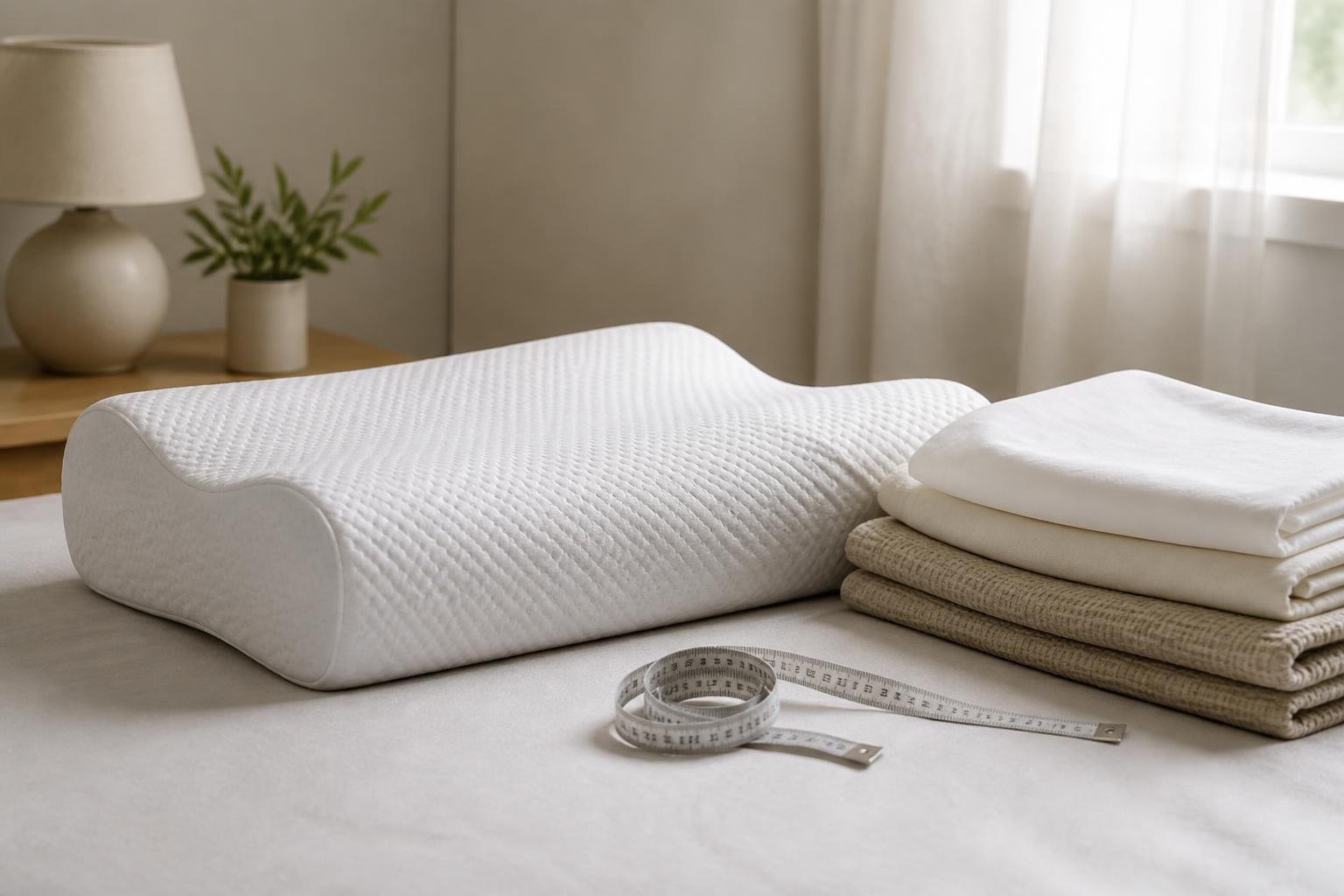

How to Choose a Pillowcase for a Contour Pillow
A contour pillow can feel very different from a flat rectangular pillow, and the pillowcase plays a larger role than many people expect. A case that is too tight may pull across the raised edges or slightly compress the pillow. One that is too loose can bunch beneath your cheek or allow the pillow to move inside it.
The right pillowcase for a contour pillow should protect the pillow without changing its basic shape. It should fit the highest and widest parts comfortably, feel pleasant against your skin and be easy to remove for washing. Fabric, seams, stretch and closure position all deserve attention.
For more practical detail, see our Signs You Need a New Pillow: How to Tell When Support Is Wearing Out.
For more practical detail, see our How Sleeping Position Can Influence Pillow Firmness.
For more practical detail, see our Persistent Neck Discomfort: When to Speak With a Professional.
This guide explains what to measure, which materials may suit different sleeping environments, how to assess a zip or envelope closure and how to check the finished fit at home.
Key takeaways
- Measure the contour pillow itself rather than relying only on labels such as standard, queen or king.
- Choose a case that follows the pillow’s curves without pulling tightly across raised support areas.
- Breathable, smooth fabrics are often more comfortable, especially for people who sleep warm or move frequently.
- Closures should sit away from the area supporting your head and neck.
- A good case should be practical to wash and should not alter the pillow’s height, firmness or intended shape.
Table of Contents
- Why fit matters with a contour pillow
- How to measure a contour pillow
- How to choose the fabric
- Assess closures, seams and surface details
- Care and maintenance considerations
- Fit check and common mistakes
- Frequently asked questions
Why fit matters with a contour pillow
Contour pillows may have raised side edges, a lower centre, curved wings or separate areas designed to accommodate the head and neck. These features are part of the pillow’s design. A pillowcase should hold the shape in place rather than flattening or distorting it.
A conventional pillowcase can work with some contour pillows, particularly when it is generously cut or made from a flexible fabric. However, excess material can gather beneath the neck or face. This may create pressure points, interfere with movement or make the pillow feel less stable.
A case that is too small presents the opposite problem. If it must be stretched forcefully over the highest contour, it may compress the foam or place constant tension on the seams. A useful rule is that the case should feel secure but not stretched to its limit.
After fitting, the pillow should still look recognisably like itself. The raised areas should remain raised, the lower centre should not be pulled flat and the fabric should lie reasonably smoothly across the sleeping surface.
How to measure a contour pillow
Size names are not completely consistent between manufacturers or countries. Measurements are therefore more dependable, especially when the pillow has an unusual profile or a pronounced neck roll.
Measure the key dimensions
Use a soft tape measure and avoid squeezing the foam. Check the pillow at its widest and longest points, then measure the highest contour rather than only the lower middle section. Record the following:
- Length: the distance across the pillow at its longest point.
- Width: the front-to-back measurement at the widest point.
- Height: the tallest raised edge or support section.
- Profile: any cut-outs, wings, curves or sharply raised sides that could affect the case’s shape.
If the pillow has a removable protective cover, decide whether that cover is intended to remain in place. In most cases, it should stay on unless the manufacturer says otherwise. Measure the pillow with the cover fitted because it contributes to the final bulk.
For reliable supporting context on this point, see Designer Pillowcase.
When comparing your measurements with a product listing, look for the case’s finished dimensions. A fabric or packaging measurement may describe the material before sewing and may not show how much room is available inside the completed case.
For more practical detail, see our Derila Ergo Discounts and Offers: What to Verify Before Buying.
To check current price, availability and purchase terms, see the Derila Ergo offer.
Allow for flexibility, not excessive looseness
A shaped pillowcase does not need to be several sizes larger. Too much spare fabric can move during the night and form folds under the head. Instead, look for a case with modest flexibility that can follow the curves without becoming baggy.
Knitted cotton, jersey and some cotton blends may be easier to fit over rounded edges than a rigid, tightly woven fabric. Stretch is useful only when the case still holds the pillow securely. If putting it on requires considerable force, the size or design is probably unsuitable.
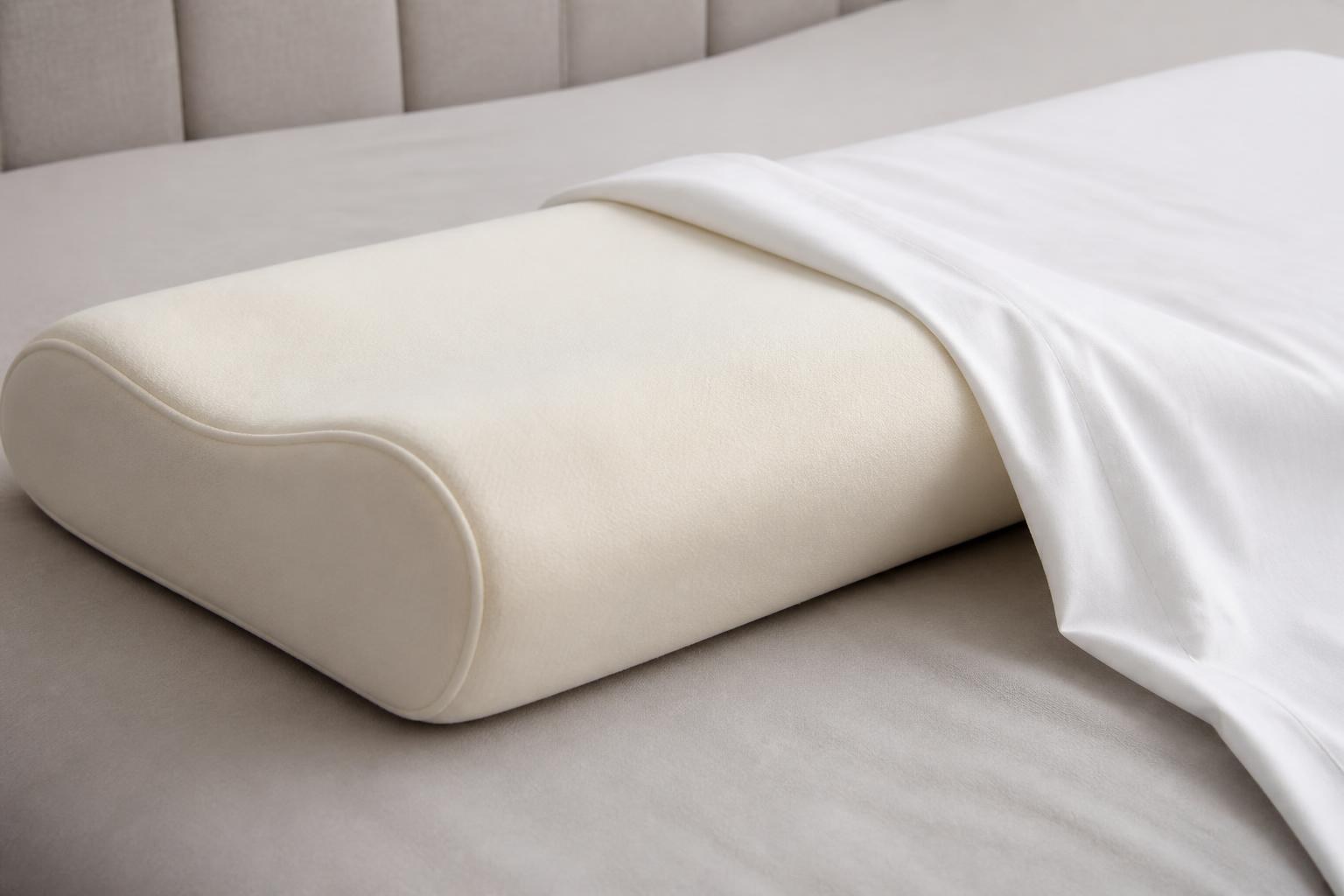
How to choose the fabric
Fabric affects temperature, texture, washing and the way the case fits around the pillow. Your sleeping environment and personal preferences matter more than a material label on its own.
| Fabric or construction | Possible advantages | Points to consider |
|---|---|---|
| Cotton percale | Light, crisp and generally breathable | Can feel less smooth and may wrinkle more easily |
| Cotton sateen | Smooth surface with a soft drape | May feel warmer than lightweight percale |
| Knitted cotton or jersey | Flexible and easier to stretch over curved shapes | Quality varies, and some versions may pill with repeated washing |
| Bamboo-derived viscose | Smooth hand feel and comfortable drape | Care requirements vary, so check the label rather than assuming high-heat washing is suitable |
| Silk or satin-style fabric | Very smooth surface with low friction | May require delicate care and may not suit people who sleep warm |
If you tend to overheat, prioritise a breathable construction and avoid choosing solely for softness. A smooth surface can be helpful if you move your head often or dislike coarse fabric, but a slippery case may also shift more easily on some types of bedding.
People with sensitive skin may prefer a simple, washable fabric without heavy dyes, rough decoration or strongly fragranced finishing products. The most suitable choice is one that feels comfortable and can be cleaned consistently.
Regular laundering may also help reduce contact with household dust and dust-mite particles. MedlinePlus identifies bedding care as one part of a broader approach to managing exposure to household allergens. A pillowcase cannot remove every allergen, but a washable, practical design makes routine cleaning easier.
Assess closures, seams and surface details
The opening method affects both convenience and comfort. Common options include envelope flaps, zips, side openings and stretch openings. None is automatically best, but the closure should not sit beneath the part of the pillow supporting your head.
Envelope and stretch closures
An envelope case uses an overlapping flap to keep the pillow inside. It has no hard fastener and is usually straightforward to remove. Check that the flap folds toward the back or side rather than creating a ridge beneath your cheek.
A stretch opening can adapt neatly to curved edges and may be convenient for a pillow with raised sides. It should still be snug enough to prevent the case from rotating or sliding off. If the opening becomes loose after washing, it may no longer provide a stable fit.
Zip closures and seams
A zip can give a tidy fit, but it should be positioned along an outer or rear edge. A covered zip is preferable because it reduces contact between the fastener and your skin. Avoid any design that places a firm ridge directly beneath the head or neck.
Also check for thick piping, decorative embroidery, large labels and bulky internal seams. These details may be harmless on a flat pillow but more noticeable on a contour design because your head may rest closer to the edge. A plain sleeping surface is usually the safer choice.
Care and maintenance considerations
Because a pillowcase touches your face and hair for several hours at a time, convenient care is more useful than a fabric that looks attractive but is difficult to wash. Before buying, check whether the case can be machine-washed, tumble-dried or air-dried according to your routine.
- Follow the care label for water temperature, detergent and drying.
- Close zips and fasteners before washing to reduce snagging.
- Use a mild detergent if fragranced products irritate your skin.
- Avoid bleach or harsh treatments unless the manufacturer specifically permits them.
- Make sure the case is fully dry before putting it back on the pillow.
Do not treat a foam contour pillow like an ordinary washable textile pillow. Memory foam and similar materials commonly require spot-cleaning, ventilation or a removable cover that can be washed separately. The pillow’s own care instructions should take priority.
For reliable supporting context on this point, see Allergies, asthma, and dust: MedlinePlus Medical Encyclopedia.
Utah State University Extension’s guidance on pillowcase construction also illustrates why measurements, seam allowances and finished dimensions matter. The same principle applies to a ready-made case: the nominal size is useful only when you understand how it relates to the actual interior fit.

Fit check and common mistakes
Once the case is fitted, lie down in your usual sleeping position for a few minutes. Check whether the contours remain in their intended positions and whether the case changes the pillow’s feel. The fabric should not pull sharply across the highest area, and there should be no zip, seam or fold under your head.
Turn your head gently and change position if you are a combination sleeper. The case should not rotate, slide away from the pillow or gather around the neck. If the pillow feels noticeably higher, flatter or firmer with the case fitted, remove it and compare the two profiles.
Several common buying mistakes are easy to avoid:
- Buying by size name alone: standard and king labels do not describe every contour pillow accurately.
- Choosing the tightest possible case: a neat appearance is not worth compressing the raised support areas.
- Ignoring closure position: a zip or thick overlap can become a pressure point if it sits in the wrong place.
- Allowing too much spare fabric: excess material can bunch beneath the cheek or neck.
- Removing the original cover without checking: the supplied cover may protect the foam or be part of the intended construction.
Replace the case when it becomes thin, permanently stretched, misshapen, difficult to clean or damaged around the seams. You may also need a different case after changing to a pillow with a different height or profile. A case that fitted one contour design should not be assumed to fit another.
Frequently asked questions
Can I use a standard pillowcase for a contour pillow?
Sometimes. It may work if the case is roomy enough, flexible and free from folds beneath your head. Measure the contour pillow first and check that the case does not compress its raised edges.
Is stretch fabric better for a contour pillowcase?
Stretch fabric can make fitting easier and may follow curved edges more neatly. It is not automatically better, though. Consider breathability, durability, washing instructions and whether the case remains secure after repeated laundering.
Where should the zip be on a contour pillowcase?
The zip should sit along the rear or outer edge, away from the area supporting your head and neck. A covered zip is preferable because it reduces the chance of a hard edge touching your skin.
How can I tell if a pillowcase is too tight?
Warning signs include difficulty putting it on, sharp tension across the raised contours, a changed pillow profile or foam that feels compressed. Remove the case and compare the pillow before deciding whether a larger or more flexible design is needed.
How often should I wash a contour pillowcase?
Follow the care label and choose a schedule that suits your household. Regular washing is sensible because the case contacts your face and hair. People who sweat heavily, have allergies or share the bed with pets may prefer to wash it more often.
Persistent Neck Discomfort: When to Speak With a Professional
Neck discomfort after an awkward night or a long day at a desk is common. It may settle with gentle movement, rest, or a change in sleeping position. The more difficult question is what to do when it does not settle, keeps returning, or starts affecting everyday life.
A pillow can influence the position of your head, neck, and shoulders while you sleep, but it is not a substitute for an assessment when symptoms persist. If you are unsure whether your discomfort is simply related to sleep posture or needs professional attention, the safest approach is to look at the duration, severity, associated symptoms, and effect on your normal activities.
For more practical detail, see our New Pillow Smell: What to Consider Before Sleeping on It.
For more practical detail, see our How to Choose a Pillowcase for a Contour Pillow.
For more practical detail, see our Signs You Need a New Pillow: How to Tell When Support Is Wearing Out.
For more practical detail, see our How Sleeping Position Can Influence Pillow Firmness.
Key Takeaways
- Persistent or recurring neck discomfort deserves attention, particularly when it is worsening or interfering with sleep, work, movement, or daily activities.
- Seek urgent medical help after a significant injury or when neck discomfort occurs with symptoms such as weakness, numbness, difficulty walking, severe headache, fever, or problems with speech or balance.
- A pillow adjustment may support a more neutral sleeping position, but it should not be used to delay professional advice.
- Keep a simple record of when symptoms began, what makes them better or worse, and any other symptoms. This can make a consultation more useful.
Table of Contents
- When Is Neck Discomfort Considered Persistent?
- When Should You Book a Professional Appointment?
- Warning Signs That Need Prompt Attention
- What to Expect From a Professional Assessment
- Safe Steps While You Arrange Advice
- Where a Pillow and Sleep Position Fit In
- Common Mistakes to Avoid
- Frequently Asked Questions
When Is Neck Discomfort Considered Persistent?
There is no single duration that defines a problem for everyone. Mild stiffness can sometimes improve over a short period, especially when it follows an unusual sleeping position or temporary muscle strain. However, discomfort becomes more worth discussing with a professional when it:
- continues without clear improvement;
- returns frequently despite changes to your routine;
- gradually becomes more intense;
- limits your ability to turn your head, work, exercise, or sleep;
- requires repeated use of pain medication; or
- is accompanied by symptoms outside the neck area.
The pattern matters as much as the number of days. For example, discomfort that is mild but repeatedly wakes you may deserve advice. So may symptoms that improve at weekends but return during workdays, since this pattern could point to factors such as desk setup, sustained posture, stress, or repetitive movement.
Persistent discomfort does not automatically mean that something serious is wrong. It does mean that guessing indefinitely is not the most useful strategy. A healthcare professional can consider possible causes and advise whether self-care, physical therapy, medication, investigations, or another form of support is appropriate.
When Should You Book a Professional Appointment?
Consider arranging a routine appointment with a doctor or another appropriately qualified healthcare professional when your neck discomfort is not improving, keeps returning, or is affecting normal life. This is especially sensible if you have already tried reasonable adjustments, such as taking regular movement breaks, modifying activities, or checking your sleep setup, without meaningful improvement.
You may also wish to seek advice when the discomfort is associated with:
- pain, tingling, or numbness that travels into an arm or hand;
- reduced strength or unusual clumsiness in an arm or hand;
- noticeable restriction in neck movement;
- recurrent headaches that appear alongside the neck symptoms;
- unexplained weight loss, unusual tiredness, or feeling generally unwell; or
- symptoms that are becoming more frequent or severe.
Information from the NHS guidance on neck pain also supports seeking medical advice when symptoms are severe, persistent, or accompanied by other concerning changes. Advice can vary depending on your age, health history, medication, and the exact nature of the symptoms, so avoid comparing your situation too closely with someone else’s.
Warning Signs That Need Prompt Attention
Some combinations of symptoms require more urgent assessment. Seek urgent medical help if neck discomfort follows a significant accident, fall, sports impact, or other injury, particularly if movement is very limited or the pain is severe.
Prompt attention is also appropriate if neck discomfort occurs with any of the following:
- weakness, numbness, or loss of coordination;
- difficulty walking, maintaining balance, or controlling movement;
- new problems with speech, vision, swallowing, or facial movement;
- a sudden, severe headache unlike your usual headaches;
- fever, marked illness, or a very stiff neck;
- loss of bladder or bowel control; or
- chest pain, shortness of breath, or other symptoms that feel immediately threatening.
These signs do not identify a specific diagnosis by themselves. They indicate that a pillow change or home experiment is not the right next step. Contact local emergency services or an urgent medical service according to the severity of the situation and the guidance available where you live.
For reliable supporting context on this point, see Neck pain.
The Mayo Clinic overview of neck pain symptoms and causes similarly distinguishes everyday discomfort from symptoms that may require medical evaluation. Use established health services for urgent guidance rather than relying on online product information.
What to Expect From a Professional Assessment
A consultation usually begins with questions about when the discomfort started, whether it was linked to an injury or change in routine, and how it behaves during the day and night. You may be asked about your work setup, exercise, sleep position, previous injuries, general health, and any medicines you take.
The professional may assess your neck movement, posture, strength, sensation, and reflexes. Further tests are not always needed, and the appropriate next step depends on the findings. It may include practical advice, a structured exercise plan, referral to a physiotherapist, medication guidance, or additional investigation.
How to prepare for a consultation
A short symptom record can help you give clear information. Write down:
- the date or approximate period when symptoms began;
- where the discomfort is located and whether it spreads;
- what makes it better or worse;
- whether it affects sleep, work, driving, or exercise;
- any numbness, tingling, weakness, fever, headache, or balance changes; and
- what you have tried, including pillow changes or over-the-counter medication.
Do not stop prescribed medication or begin a demanding exercise programme based solely on general online advice. Ask a professional what is suitable for your circumstances.
Safe Steps While You Arrange Advice
For mild discomfort without warning signs, simple measures may make daily life more comfortable while you monitor the situation. Keep the neck moving gently within a comfortable range rather than holding it rigid for long periods. Change position regularly, especially during computer work or travel, and avoid remaining in one posture for hours.
Review activities that place sustained demand on the neck. A laptop positioned low, prolonged phone use, heavy bags, or repetitive overhead work can all influence how the neck feels. Adjust one factor at a time so you can tell what helps. Gentle warmth or a wrapped cold pack may feel useful for some people, but protect the skin and follow appropriate safety guidance.
Medication is not suitable for everyone. If you are considering a pain reliever, check the label and ask a pharmacist or healthcare professional if you have other medical conditions, take regular medication, are pregnant, or are uncertain about interactions.
Stop an activity if it clearly worsens symptoms, produces new tingling or weakness, or causes significant pain. Home care should be a way to support comfort while symptoms settle or while you arrange advice – not a reason to ignore a deteriorating pattern.
Where a Pillow and Sleep Position Fit In
Your pillow helps fill the space between your head and the mattress. The right height depends on factors such as sleeping position, shoulder width, mattress firmness, and personal comfort. A pillow that is too high can leave the neck angled upward; one that is too low may allow the head to drop. Neither position is guaranteed to cause discomfort, but either can make a poor sleep setup more likely to feel unpleasant.
Side sleepers generally need enough height to keep the head from tilting down toward the mattress. Back sleepers often prefer a lower profile that supports the natural curve of the neck without pushing the head forward. Stomach sleeping can place more rotation through the neck, so changing position may be worth considering if it repeatedly aggravates symptoms.
These are general comfort principles, not a diagnosis or treatment plan. If you have persistent neck discomfort, do not keep buying different pillows in the hope that one will solve the problem. Make modest changes, give yourself time to assess comfort, and seek professional advice when symptoms continue.
For more practical detail, see our Derila Ergo Discounts and Offers: What to Verify Before Buying.
To check current price, availability and purchase terms, see the Derila Ergo offer.
For reliable supporting context on this point, see Neck pain: Symptom.
Check whether your mattress also affects the result. A very soft or very firm sleep surface can change how far your shoulder sinks and therefore alter the pillow height you need. Assess the complete sleep setup rather than judging a pillow in isolation.
Common Mistakes to Avoid
Ignoring a changing pattern
Discomfort that used to settle quickly but now lasts longer, spreads, or affects movement deserves a fresh assessment. Do not assume that a familiar symptom has the same cause every time.
Chasing firmness instead of alignment
A firmer pillow is not automatically more supportive. Support comes from an appropriate shape and height for your body and sleeping position. Excessive firmness may create pressure, while excessive softness may allow the head to sink too far.
Making too many changes at once
Replacing the pillow, mattress, desk chair, exercise routine, and medication simultaneously makes it difficult to identify what affected your symptoms. Unless a professional advises otherwise, use a measured approach and keep notes.
Using online advice as a diagnosis
Articles can help you recognise when to seek advice, but they cannot examine your neck or interpret your complete medical history. Persistent, severe, or unusual symptoms should be discussed with a qualified professional.
Frequently Asked Questions
How long should I wait before seeking help for neck discomfort?
There is no universal waiting period. Arrange professional advice if symptoms are not improving, keep returning, interfere with normal activities, or are accompanied by numbness, weakness, fever, severe headache, or other concerning changes. Seek urgent help after a significant injury or when serious warning signs appear.
Can a pillow cause persistent neck discomfort?
A pillow that does not suit your sleeping position may contribute to an uncomfortable head and neck position. However, persistent symptoms can have many possible causes. Changing your pillow should not replace an assessment when discomfort continues or worsens.
Should I stop sleeping on my side if my neck hurts?
Not necessarily. Side sleeping can be comfortable when the pillow fills the space between the mattress and the side of your head without tilting it sharply. If a position repeatedly aggravates symptoms, try a gentle adjustment and discuss ongoing problems with a professional.
Is neck discomfort with arm tingling a reason to seek advice?
Yes. Neck discomfort with tingling, numbness, weakness, or reduced coordination in an arm or hand should be discussed with a healthcare professional. Urgency depends on severity, onset, and other symptoms, so seek prompt guidance if it is sudden, worsening, or accompanied by weakness or difficulty walking.
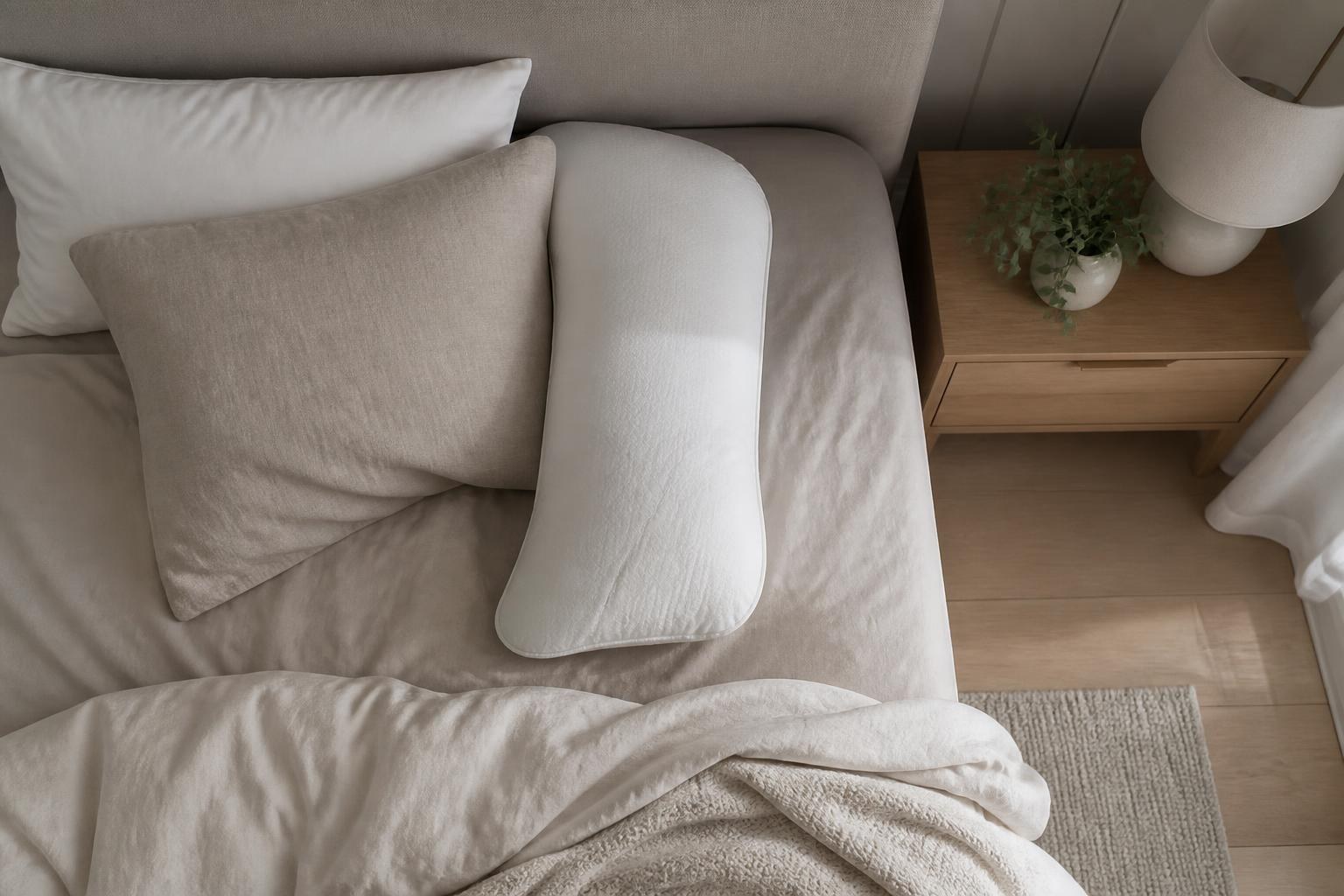
The key message is simple: a pillow can be part of a comfortable sleep setup, but persistent neck discomfort deserves a wider view. Pay attention to the pattern, respond promptly to warning signs, and involve a qualified professional when symptoms do not settle or begin to affect your life.
Derila Ergo Discounts and Offers: What to Verify Before Buying
A discount can make a pillow purchase more attractive, but the headline percentage is only one part of the decision. Before ordering Derila Ergo, check what the offer includes, when the price applies, whether delivery is charged separately and what happens if you change your mind.
Online promotions may include countdowns, crossed-out prices, bundles, voucher codes or quantity-based savings. These details are not necessarily a problem, but they can make it harder to compare the real cost. Reviewing the offer page and the final checkout summary gives you a clearer basis for deciding.
To check current price, availability and purchase terms, see the Derila Ergo offer.
This guide explains how to assess a Derila Ergo discount without relying on assumptions. Prices, stock, delivery charges and promotional terms can change, so confirm the current details on the official Derila Ergo offer page before placing an order.
Key Takeaways
- Judge an offer by the final payable total, not just the advertised percentage.
- Check whether the promotion applies to one pillow, a bundle or selected options only.
- Review delivery charges, taxes, payment terms and optional add-ons before confirming payment.
- Read the return, refund and cancellation conditions so you understand your options after ordering.
- A discount does not make an unsuitable pillow suitable. Consider shape, height, firmness and sleeping position first.
Table of Contents
- How to Read a Derila Ergo Offer
- Check the Real Total Cost
- Verify What the Discount Applies To
- Look Beyond the Headline Percentage
- Review Delivery, Returns and Refunds
- Recognise Pressure-Based Promotion Tactics
- A Simple Checklist Before Ordering
- How to Decide If an Offer Is Worthwhile
- Frequently Asked Questions
How to Read a Derila Ergo Offer
A product offer usually combines several pieces of information: the product description, current price, promotion details, delivery terms and purchase conditions. Read them together rather than treating the discount as a separate feature.
Start by identifying the item included in the promotion. It may be a single pillow, a multi-item bundle or a product with optional extras. If several quantities are displayed, compare the total cost for each option. A lower price per pillow is useful only if you actually need the additional pillows.
Next, find the price that applies to the configuration you intend to buy. A prominent figure may relate to a particular quantity or promotional arrangement. Before payment, confirm that the checkout summary shows the same product, quantity and price you selected.
Also look for conditions such as an expiry date, minimum order, required code, payment restriction or rule against combining promotions. Clear terms should allow you to understand how the offer works without guessing.
Check the Real Total Cost
The most useful figure is the final total payable at checkout. The displayed product price may not be the complete cost for your destination. Delivery charges, taxes or other disclosed fees can affect the amount.
Before entering payment details, check the product price, quantity, shipping method, delivery charge, estimated delivery information and currency. Look for taxes or duties that may be included in the total or calculated separately. Review the order summary for accessories, additional products or services you did not intend to select. Unless the terms clearly state otherwise, confirm that the purchase is a one-time transaction rather than a recurring charge.
The U.S. Federal Trade Commission explains that mandatory fees should be disclosed clearly before consumers agree to pay. The practical lesson applies broadly: do not evaluate a promotion from a partial price when the final amount is available for review. The FTC’s guidance on advertising also emphasises that important qualifications should be clear and understandable, rather than hidden in a way that changes the overall impression.
If the amount changes between the product page and checkout, pause before proceeding. It may reflect delivery, a different quantity or an optional add-on, but you should understand the difference first.
Verify What the Discount Applies To
The word “discount” can describe several different arrangements. It may mean a reduction on one item, a lower per-unit price for a bundle, a promotional code, a temporary offer or an incentive linked to a particular order size. Those arrangements should not be compared as though they were identical.
Check whether the saving applies to the first item, every item or only additional items in a bundle. Confirm whether it is applied automatically or requires a code. Check whether all quantities and product configurations are included, whether another offer can be used at the same time and what comparison price is used to calculate the stated saving.
For reliable supporting context on this point, see The Rule on Unfair or Deceptive Fees: Frequently Asked Questions.
A bundle can make sense if you genuinely need more than one pillow, perhaps for different bedrooms or household members. It is less useful when the larger order encourages you to buy products that will remain unused. Calculate both the total amount spent and the number of items you are likely to use.
Keep a copy of the offer details if the terms are likely to change during the promotion. A screenshot or saved confirmation can help you compare the advertised arrangement with the checkout record, although the applicable purchase terms remain the key document.
Look Beyond the Headline Percentage
A large percentage reduction attracts attention, but it does not establish that an offer is good value. Consider the complete purchase alongside your needs and realistic alternatives.
First ask whether an ergonomic, shaped design is what you are looking for. A contour pillow is designed to influence the position of the head and neck, but the way it feels depends on factors such as shoulder width, mattress firmness, body shape and sleeping position. A side sleeper may need a different height from someone who mainly sleeps on their back. Combination sleepers may also need time to adjust to a shaped surface.
Before treating a discount as a reason to buy, consider whether the pillow’s shape matches the support you want, whether its height is likely to work with your shoulders and mattress, and whether you generally prefer a softer or more supportive feel. Ask yourself whether you would still consider the product at the stated non-discounted price. If the answer is no, identify whether the concern is the product itself or simply the size of the promotion.
For a broader guide to matching firmness with sleeping position, see how sleeping position can influence pillow firmness. A discount may reduce the cost of trying a new pillow, but it cannot guarantee that its height, shape or feel will suit you.
Review Delivery, Returns and Refunds
Delivery and return conditions can change the practical value of an offer, particularly when ordering from another country or buying a bundle. Check where the product ships, how delivery is calculated and what steps are required if the parcel arrives damaged or the pillow is not right for you.
Find out when the return period begins. It may be calculated from the order date or from delivery, depending on the applicable terms. Check whether the product must be returned in particular packaging or condition, whether return shipping is paid by the customer and how long a refund may take after the returned item is received.
If the promotion includes multiple items, confirm whether the complete order must be returned or whether individual items can be handled separately. A bundle can have different practical consequences from a single-item purchase.
Keep the order confirmation, receipt and any messages about cancellation or return. These records make it easier to resolve a question about the order. If you experience a problem with a transaction, use the seller’s stated support and cancellation process promptly.
Recognise Pressure-Based Promotion Tactics
Some offers use urgency to encourage an immediate decision. A genuine limited-time promotion can exist, but urgency should not replace basic due diligence. If a page repeatedly suggests that only seconds remain, take enough time to verify the product, price and terms.
Be cautious when the promotion does not explain what the saving is calculated against, when the final price is difficult to find until payment details are entered, or when products and services appear in the order without an obvious explanation. Difficult-to-find delivery, cancellation or return information is another reason to slow down. Be especially sceptical of absolute claims about comfort or health outcomes. A pillow may support a sleeping position, but no promotion can guarantee a particular result for every sleeper.
A clear offer should leave you able to answer three basic questions: What am I buying? What will I pay in total? What are my options if I change my mind or the order has a problem?

A Simple Checklist Before Ordering
Use the following sequence when reviewing a Derila Ergo discount or offer:
For reliable supporting context on this point, see Advertising FAQs: A Guide for Small Business.
- Identify the product: Confirm the pillow model, quantity and included items.
- Check the displayed price: Make sure it applies to the configuration you selected.
- Open the order summary: Look for delivery, taxes, extras and the final total.
- Read the promotion conditions: Check expiry information, eligibility and whether a code is required.
- Review delivery information: Confirm the destination, shipping method and estimated timeframe.
- Read the return terms: Understand the return window, condition requirements and refund process.
- Save the confirmation: Keep the order number, receipt and relevant terms.
- Make a suitability check: Consider your sleeping position, preferred feel and desired pillow height.
If one of these details is missing or unclear, delay the purchase until you can verify it. For current pricing and available promotions, use the official Derila Ergo offer page rather than relying on an old advertisement, search result or screenshot.
How to Decide If an Offer Is Worthwhile
An offer is potentially worthwhile when the product matches your requirements, the final total is clear and the purchase terms are acceptable. The discount should support the decision, not make the decision for you.
One practical approach is to write down your priorities before ordering. You might care most about a shaped design, a particular firmness, a washable cover, delivery to your location or the ability to return the product. Compare the offer against those priorities instead of comparing percentages alone.
A new ergonomic pillow may feel different from a conventional pillow during the first few nights. That adjustment period is not automatically evidence that something is wrong, but persistent discomfort or ongoing neck symptoms should not be ignored. Consider speaking with an appropriate healthcare professional if symptoms continue or concern you.
If your current pillow is flattened, uneven or no longer supporting your usual position, our guide to the signs you need a new pillow may help you decide whether replacement is sensible before you compare promotions.
Frequently Asked Questions
Where can I check the current Derila Ergo discount?
Check the official Derila Ergo offer page for the current price, available bundles, delivery information and promotional conditions. Avoid relying on outdated screenshots or third-party claims.
Does a larger Derila Ergo discount always mean better value?
No. A larger order may have a lower per-item price but a higher total cost. Compare the number of pillows you genuinely need with the complete amount payable, including disclosed delivery or other charges.
What should I check before using a Derila Ergo promotion code?
Check whether the code applies to the product and quantity you want, whether it has an expiry date, whether it can be combined with another offer and whether the reduction appears in the final checkout summary.
Can I return a pillow purchased with a discount?
That depends on the applicable purchase terms. Review the stated return window, condition requirements, shipping responsibilities and refund process before ordering, and retain your confirmation and receipt.
Should I buy immediately because an offer has a countdown?
A countdown is not a substitute for checking the product and terms. Take enough time to confirm the final total, delivery details, return policy and whether the pillow suits your sleeping position and comfort preferences.
How Sleeping Position Can Influence Pillow Firmness
The best pillow firmness is not determined by personal preference alone. Your sleeping position, shoulder width, mattress feel and pillow height all influence how well your head and neck are supported during the night.
A pillow that feels comfortably soft when you press it with your hand may compress too much under your head. A very firm pillow may hold its shape well but create unwanted pressure if it is too high or does not suit your preferred position. The goal is not to find the hardest or softest option, but a pillow that helps keep your head and neck in a reasonably neutral position while allowing you to relax.
For more practical detail, see our Pillow Firmness and Body Size: What to Consider.
For more practical detail, see our Best Pillow Characteristics for Back Sleepers: A Practical Guide.
For more practical detail, see our How to Choose a Pillowcase for a Contour Pillow.
For more practical detail, see our Signs You Need a New Pillow: How to Tell When Support Is Wearing Out.
This guide explains the relationship between sleeping position and pillow firmness, with practical points for side sleepers, back sleepers and people who change position during the night.
Key takeaways
- Side sleepers commonly need a firmer, higher-support pillow because it must fill the space between the head and the mattress.
- Back sleepers often prefer medium firmness and moderate height, although body shape and mattress softness also matter.
- Stomach sleeping usually calls for a lower, softer pillow to reduce excessive neck rotation or lifting.
- A pillow can feel too firm when it creates pressure or holds the head unnaturally high; it can feel too soft when the head sinks or rolls out of alignment.
- Give a new pillow several nights to assess, but do not ignore persistent neck discomfort or other symptoms.
Table of Contents
- Why sleeping position matters when choosing firmness
- Firmness for side sleepers
- Firmness for back sleepers
- Firmness for stomach sleepers
- What combination sleepers should look for
- Signs your pillow is too soft or too firm
- How your mattress and body shape change the answer
- How to choose and test pillow firmness
- When to seek professional advice
- Frequently asked questions
Why sleeping position matters when choosing firmness
Sleeping position determines the direction in which your head is supported and the amount of space a pillow needs to fill. When you sleep on your side, your shoulder creates a larger gap between your head and the mattress. A pillow with enough structure can fill that gap without collapsing quickly.
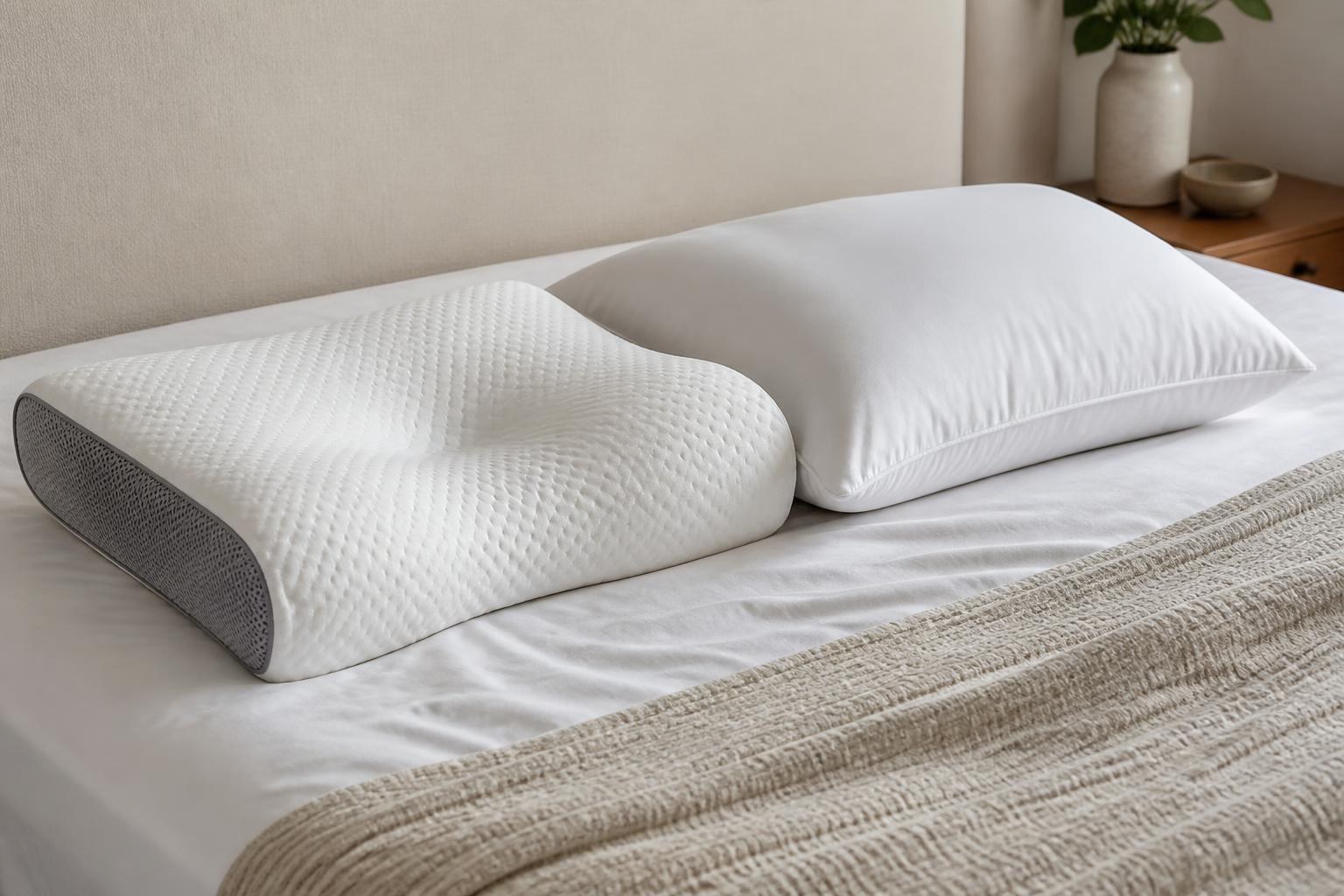
Back sleeping creates a smaller gap, so excessive height can push the head forward. A moderately supportive pillow is often more suitable because it can cradle the head without lifting it too far. Stomach sleeping places different demands on the neck: the head is usually turned to one side, and a thick pillow can increase the angle between the head and the mattress.
Firmness and height are related but not identical. A firm pillow is not automatically high, and a soft pillow is not always low. For example, a low-profile memory foam pillow may feel relatively firm, while a tall fibre pillow may compress substantially under load. Consider how the pillow behaves after you lie down rather than judging it only by touch.
Firmness for side sleepers
Side sleepers often benefit from a medium-firm to firm pillow with enough height to support the head between the mattress and shoulder. The best choice depends on shoulder width, mattress firmness and the extent to which the pillow compresses.
A very soft pillow may flatten during the night, leaving the head angled down toward the mattress. This can make the pillow feel comfortable at first but less supportive after several hours. A firm, shaped pillow may provide more consistent support, provided its contour and height match the sleeper’s body.
What to check in a side-sleeping position
- Your nose should point roughly forward rather than noticeably toward the mattress or ceiling.
- Your head should feel supported without pressure building under the ear or jaw.
- The pillow should fill the space above the shoulder without forcing the shoulder forward.
- The shoulder should remain on the mattress, not be pushed upward by an excessively tall pillow.
People with broader shoulders may need more loft or a more resilient filling. A softer mattress can also reduce the gap because the shoulder sinks into it. That means a pillow that works on a firm mattress may feel too high on a plush one.
Firmness for back sleepers
Back sleepers commonly need a pillow with moderate height and enough firmness to prevent the head from sinking too far. A pillow that is too soft may allow the head to fall backward, while one that is too firm or tall can push the chin toward the chest.
Look for a pillow that supports the natural curve of the neck without creating a pronounced bend. Contoured or ergonomic designs may be useful for some back sleepers because different sections can support the head and neck at different heights. However, the shape still needs to suit your body and mattress.
For reliable supporting context on this point, see Sleeping positions that reduce back pain.
A pillow that feels supportive while lying down may become less comfortable if it encourages the head to remain tilted. Try to assess the position from the side, using a mirror or a quick photograph taken by someone else. The aim is not perfect medical alignment, but a relaxed, neutral-feeling posture without obvious lifting or dropping of the head.
Firmness for stomach sleepers
Stomach sleeping generally works better with a low, relatively soft pillow, or sometimes no pillow under the head. A thick or very firm pillow can raise the head while it is turned to the side, potentially making the position feel strained.
Some people who identify as stomach sleepers actually spend part of the night in a semi-stomach or three-quarter position. In that case, a low-profile pillow with some resilience may offer a useful compromise. It should compress enough to avoid excessive height but still provide a small amount of cushioning.
To check current price, availability and purchase terms, see the Derila Ergo offer.
There is no need to force yourself into a different position solely because a particular pillow recommendation says it is ideal. Comfort, natural movement and the ability to relax matter. If stomach sleeping consistently leaves you with neck discomfort, experimenting with a lower pillow and a slightly different position may be worthwhile.
For more practical detail, see our Persistent Neck Discomfort: When to Speak With a Professional.
What combination sleepers should look for
Combination sleepers change position during the night, so a pillow that performs well in only one position may become inconvenient. A medium or adjustable firmness can be a practical starting point, particularly when the pillow can be reshaped or used with removable layers.
Consider the position in which you spend the most time, then look for enough flexibility for your secondary position. For example, someone who moves mainly between the side and back may prefer a supportive pillow with a moderate profile rather than an extremely high side-sleeper pillow.
Responsiveness also matters. A pillow that quickly regains its shape can make repositioning easier, while a very dense material may feel slow to adjust. On the other hand, excessive softness can make the head move too freely. The right balance depends on whether you value a stable, held-in feeling or a softer, less structured surface.
Signs your pillow is too soft or too firm
Firmness is personal, but certain patterns can reveal a mismatch. Assess the pillow over several nights rather than relying on the first few minutes, especially if it is made from a material that changes feel with temperature.
Possible signs that a pillow is too soft
- Your head sinks until the pillow feels nearly flat.
- You wake up and find your head has moved off the main support area.
- You regularly fold or double the pillow to create more height.
- The pillow loses its shape during the night and needs frequent rearranging.
Possible signs that a pillow is too firm or too high
- Your head feels pushed upward or forward.
- You notice pressure around the ear, temple or side of the face.
- Your neck feels held in one position rather than comfortably supported.
- You sleep better when part of the pillow is removed or compressed.
These signs can also result from incorrect height, a worn-out pillow or a mattress that does not suit your sleeping position. Firmness should therefore be assessed together with shape, loft and material behaviour.
How your mattress and body shape change the answer
A pillow never works in isolation. A firm mattress usually leaves the shoulder higher, increasing the space the pillow needs to fill for side sleeping. A softer mattress allows the shoulder and upper body to sink, often reducing the required pillow height.
Body proportions matter as well. Shoulder width, neck length and head size can all affect how a particular pillow feels. Two people who sleep in the same position may need different firmness levels because their bodies interact with the mattress differently.

Consider your usual sleep surface when comparing pillows. If you frequently sleep in different beds, such as at home and while travelling, a highly adjustable design may be easier to adapt. A pillow that is slightly too high can sometimes be made more comfortable by changing the mattress position or removing an insert, but major mismatches are harder to correct.
For reliable supporting context on this point, see Neck pain and stiff neck.
How to choose and test pillow firmness
Start with your main sleeping position, then consider the following checklist:
- Measure the gap. Lie in your usual position and consider how much space exists between your head and the mattress.
- Check compression. Ask how much the pillow will flatten under your head, rather than judging its firmness by pressing it with one hand.
- Look for stable support. The pillow should keep its shape long enough to support you between position changes.
- Consider adjustability. Removable layers, flexible filling or a shaped design can make fine-tuning easier.
- Review the return terms. A settling-in period is useful, but an appropriate trial or return policy reduces the risk of choosing a poor match.
When testing a new pillow, use your normal mattress and sleep position. Try it for several nights if it feels unfamiliar, since a different shape can require an adjustment period. Avoid changing the pillow, mattress and sleeping position at the same time, because it becomes difficult to identify what helped or caused discomfort.
When to seek professional advice
A pillow can influence comfort and sleeping posture, but it is not a treatment for a medical condition. If you experience persistent neck pain, numbness, weakness, severe stiffness or symptoms that interfere with daily activities, seek advice from an appropriate healthcare professional. The NHS advises people with concerning or ongoing neck symptoms to obtain medical guidance rather than relying only on self-care.
People managing an existing musculoskeletal condition, recovering from an injury or experiencing recurring symptoms may also benefit from personalised advice. A healthcare professional can help distinguish a pillow-related comfort issue from a problem requiring further assessment. Mayo Clinic guidance on sleeping positions similarly focuses on reducing strain through positioning rather than promising that a particular pillow will resolve back pain.
Frequently asked questions
Is a firm pillow always better for side sleepers?
No. Side sleepers often need more structure and height, but an excessively firm or tall pillow can create pressure and push the head out of a comfortable position. The best option provides stable support while matching your shoulder width and mattress.
What firmness is usually suitable for back sleeping?
Many back sleepers prefer medium firmness with moderate height. The pillow should support the head and neck without pushing the head forward or allowing it to sink too far backward. Individual body shape and mattress feel can change the ideal choice.
Can a soft pillow support the neck properly?
Yes, if it retains enough shape and has the right height. A soft pillow becomes less suitable when it compresses completely, shifts away from the head or leaves the neck unsupported during the night.
How long should I try a new pillow before deciding?
Give yourself several nights to adapt, using your normal bed and sleeping position. If the pillow repeatedly creates pressure, forces your head into an awkward angle or worsens discomfort, it may not be the right firmness or height for you.
Should stomach sleepers use a firm pillow?
Usually, a low and softer pillow is more comfortable for stomach sleeping because it avoids lifting the head too far while it is turned to the side. Some stomach sleepers prefer no pillow under the head, while others need a small amount of cushioning.
Signs You Need a New Pillow: How to Tell When Support Is Wearing Out
A pillow can look perfectly usable long after it has stopped providing consistent support. The filling may flatten gradually, the cover may lose its shape, or your sleeping preferences may change without you noticing. Over time, you may begin adjusting the pillow during the night, waking with stiffness or feeling more comfortable when you sleep away from home.
These changes do not automatically mean that your pillow is responsible for every discomfort. Sleep position, mattress feel, stress, activity and health can all influence how you feel in the morning. Still, recognizing the signs you need a new pillow can help you decide whether your current one is no longer a good fit.
For more practical detail, see our New Pillow Smell: What to Consider Before Sleeping on It.
For more practical detail, see our Best Pillow Characteristics for Back Sleepers: A Practical Guide.
For more practical detail, see our Persistent Neck Discomfort: When to Speak With a Professional.
For more practical detail, see our How Sleeping Position Can Influence Pillow Firmness.
This guide explains what to inspect, how to test your pillow at home and what to consider when choosing a replacement.
To check current price, availability and purchase terms, see the Derila Ergo offer.
Key Takeaways
- A pillow may need replacing when it has lost its shape, developed permanent lumps or no longer keeps your head comfortably supported.
- Morning neck or shoulder stiffness can be a sign of poor pillow fit, although it can have many other causes.
- Visible stains, persistent odor, damaged materials and allergy-related irritation are practical reasons to consider a replacement.
- Your ideal pillow can change after a new mattress, a change in sleeping position or changes in shoulder and body shape.
- Choose a replacement based on height, firmness, shape, material and care requirements rather than appearance alone.
Table of Contents
- You Wake With Repeated Neck or Shoulder Discomfort
- The Pillow Has Lost Its Shape or Support
- Your Sleeping Position or Mattress Has Changed
- You Can See Physical Wear and Hygiene Problems
- You Keep Adjusting the Pillow During the Night
- Simple Tests to Assess Your Current Pillow
- What to Look for in a Replacement Pillow
- When Pillow Replacement Is Not the Whole Answer
- Frequently Asked Questions
You Wake With Repeated Neck or Shoulder Discomfort
One of the most noticeable signs you need a new pillow is a pattern of discomfort that appears after sleeping and improves as you move through the day. You might wake with a stiff-feeling neck, tight shoulders or the sense that your head was positioned awkwardly during the night.
A pillow that is too high can push the head forward or tilt the neck. One that is too low may allow the head to drop toward the mattress. For side sleepers, insufficient height can leave the neck angled downward because the shoulder creates more space between the head and bed. Back sleepers often need less height, while stomach sleepers commonly feel more comfortable with a lower, more flexible pillow.
Morning discomfort is not proof that the pillow is the cause. However, if it happens regularly and your pillow has also become flat, lumpy or unusually firm, replacing it is a reasonable step. If neck pain is persistent, severe or accompanied by other symptoms, consult a qualified healthcare professional. The NHS advises seeking medical guidance for ongoing or concerning neck symptoms rather than relying only on changes to bedding.
The Pillow Has Lost Its Shape or Support
Most pillows change over time. Fibers compress, foam can lose resilience and natural fillings may shift. A pillow that once supported your head evenly may develop a hollow in the middle or collapse at the edges.
Look for these changes:
- A permanent dip that does not recover after the pillow is fluffed or left unused.
- Lumps, uneven sections or areas that feel noticeably denser than others.
- An edge that collapses when you place your head near it.
- A pillow that feels much thinner than it did when new.
- Foam that has become brittle, cracked or slow to regain its original shape.
Temporary compression is not always a problem. Some pillows are designed to soften or conform under the head. The concern is a lasting loss of structure that makes it difficult to maintain a comfortable position throughout the night.
Folding or rolling a pillow may briefly restore its height, but this can hide rather than solve the problem. If you have to reshape it every night to create a supportive surface, it may be past its useful life.
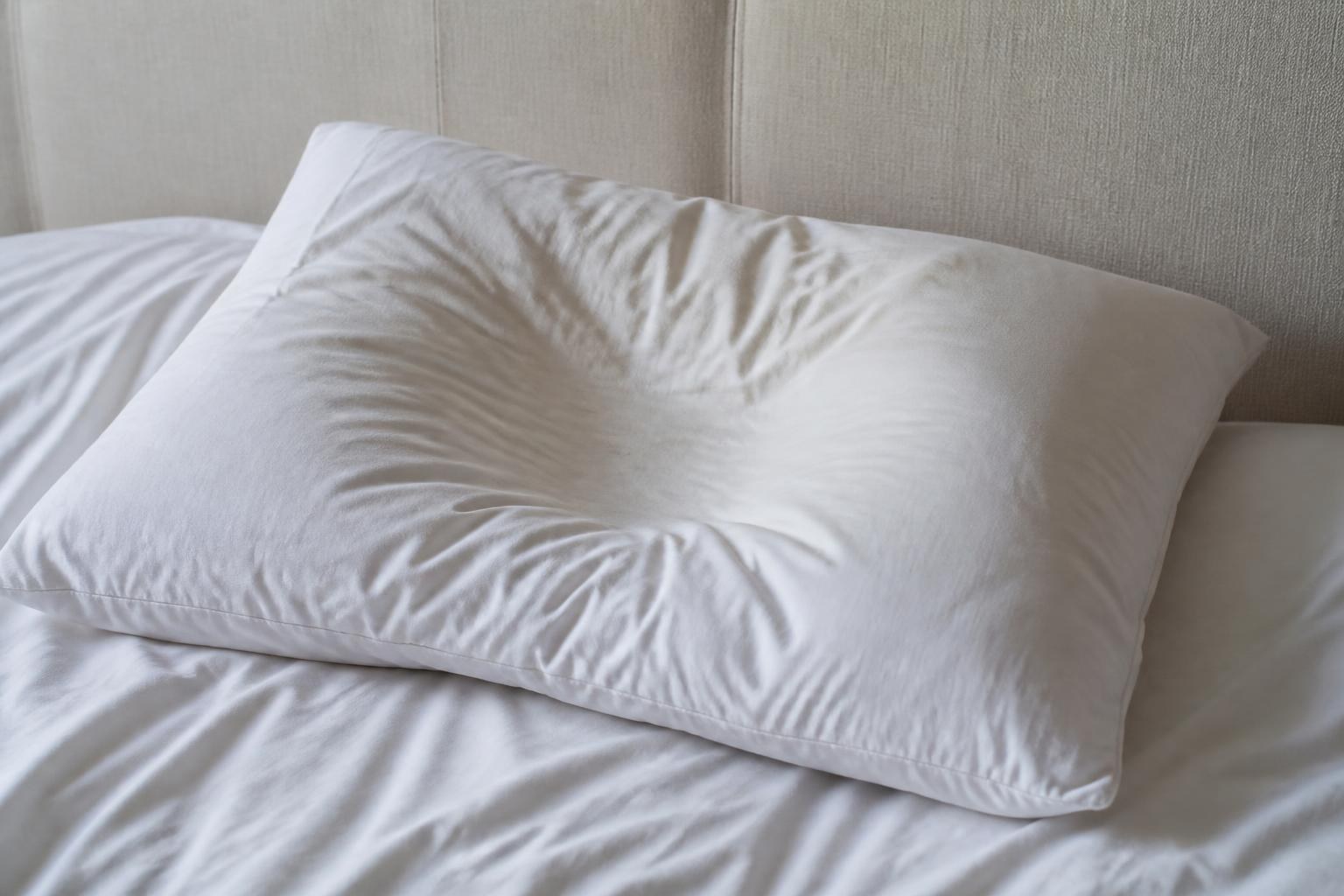
Your Sleeping Position or Mattress Has Changed
A pillow that worked well last year may not suit you after a change in sleeping habits. You may begin sleeping on your side because of a new routine, spend more time on your back or alternate between several positions. Each position changes the amount of space between your head and the mattress.
Your mattress also matters. A softer mattress allows the shoulder to sink farther, which can reduce the pillow height needed by some side sleepers. A firmer mattress may leave the shoulder higher, increasing the space the pillow needs to fill. A new mattress can therefore make an old pillow feel too high or too low even if the pillow itself has not changed.
For reliable supporting context on this point, see Sleeping positions that reduce back pain.
Body changes can affect fit as well. Changes in shoulder width, body weight, muscle development or mobility may alter how a pillow feels. The goal is not to find a universally perfect height, but to find a pillow that supports your current sleeping position without forcing the head noticeably up, down or forward.
You Can See Physical Wear and Hygiene Problems
Not every worn pillow needs immediate replacement, but visible deterioration should not be ignored. Pillows collect skin oils, perspiration and product residue even when they are protected by a pillowcase. Over time, the cover may become thin, stained or difficult to clean properly.
Consider replacing the pillow when you notice:
- Persistent staining or odor that remains after appropriate cleaning.
- A torn cover, exposed filling or broken seams.
- Moisture damage, mold-like spotting or signs of contamination.
- Filling escaping through holes or collecting unevenly inside the cover.
- Dust or irritation that seems to worsen when you use the pillow.
Always follow the manufacturer’s care instructions. Memory foam, fiber-filled and latex pillows often require different cleaning methods, and soaking some materials can cause permanent damage. A removable, washable cover can extend the practical life of a pillow, but it cannot restore a deteriorated inner core.
You Keep Adjusting the Pillow During the Night
Frequent adjustment is another useful clue. You may fold the pillow, place an arm beneath it, push filling back into the corners or turn it repeatedly to find a comfortable side. Occasional movement is normal, but a nightly struggle suggests that the pillow is no longer providing stable support.
Pay attention to what you are trying to correct. If you keep folding the pillow, it may be too low or too soft. If you push it away from your neck, it may be too high or too firm. If you search for a dense section, the filling may have become uneven. These observations can guide your next choice more effectively than simply buying a pillow described as soft or supportive.
It is also worth checking the rest of the sleep setup. A pillow can feel unstable if the mattress is sagging, the bed base is uneven or the pillowcase is too tight and compresses the filling. Fixing one of these issues may extend the life of an otherwise sound pillow.
Simple Tests to Assess Your Current Pillow
The visual and recovery test
Remove the pillowcase and place the pillow on a flat surface. Check whether it sits evenly and whether one side is visibly lower. Press the center and several edges, then watch how quickly the material recovers. Foam should generally regain its shape according to its design, while fiber-filled pillows may need gentle fluffing. Permanent dents or weak edges suggest declining support.
The alignment check
Ask someone to take a side-on photograph while you lie in your normal sleeping position, or use a mirror if practical. Your head should not appear markedly tilted upward or downward in relation to your neck and upper back. This is only a general comfort check, not a medical assessment, but it can reveal an obviously unsuitable height.
The position-and-feeling log
For three or four nights, record your sleeping position, whether you adjusted the pillow and how your neck and shoulders felt on waking. Look for a pattern rather than judging one night. A pillow that feels acceptable for ten minutes but becomes uncomfortable after several hours may not be providing consistent support.
What to Look for in a Replacement Pillow
Once you decide your current pillow is no longer suitable, focus on fit rather than a fixed replacement schedule. The right choice depends on your position, shoulder width, mattress feel and preference for a softer or more structured surface.
| Factor | Questions to ask |
|---|---|
| Height | Does it fill the space between your head and mattress without tilting your neck? |
| Firmness | Does it remain supportive without feeling hard or pushing your head forward? |
| Shape | Would a traditional shape, contour or adjustable design suit your position and movement? |
| Material | Do you prefer the conforming feel of foam, the flexibility of fiber or another material? |
| Breathability | Does the construction allow enough airflow for your comfort? |
| Care | Can the cover be removed and cleaned, and are the care instructions practical for you? |
Side sleepers often need enough loft to fill the shoulder-to-head gap, while back sleepers may prefer a lower profile that supports the natural curve of the neck without lifting the head too far. Combination sleepers may benefit from a shape that remains comfortable when changing positions.
For reliable supporting context on this point, see Neck pain.
Contour pillows can provide different support zones for the head and neck, but their shape is not automatically suitable for everyone. If you are considering an ergonomic design, check its dimensions, material, firmness and intended sleeping positions. Allow time to adjust, but do not ignore persistent discomfort.

When Pillow Replacement Is Not the Whole Answer
A new pillow can improve the fit of your sleep setup, but it cannot address every source of discomfort. A mattress that sags, an unsuitable sleeping position, daytime muscle tension or an underlying health issue may continue to affect how you feel in the morning.
Seek professional advice if pain persists despite reasonable changes, becomes severe, follows an injury or is accompanied by symptoms such as weakness, numbness, fever or difficulty moving. The Mayo Clinic’s guidance on sleeping positions also emphasizes that positioning can influence comfort, but sleep setup advice should not replace medical assessment when symptoms continue.
If you have no concerning symptoms, make one change at a time where possible. Adjust the pillow, keep the rest of your routine steady and evaluate comfort over several nights. This makes it easier to understand whether the replacement is helping or whether another part of the sleep environment needs attention.
Frequently Asked Questions
How often should you replace a pillow?
There is no universal replacement date. Replace a pillow when it no longer keeps its shape, becomes unhygienic, feels damaged or stops providing comfortable support. The material, quality, care and frequency of use all affect its useful life.
Can a bad pillow cause neck pain?
An unsuitable pillow can influence head and neck position and may contribute to discomfort for some people. However, neck pain has many possible causes. Persistent or severe symptoms should be discussed with a healthcare professional.
How do you know if a pillow is too high?
You may notice that your head is pushed forward, your neck feels bent or you need to move the pillow away from your shoulders. A side-on alignment check can help identify an obvious height problem, although comfort and professional advice should guide the final decision.
Is a lumpy pillow always ready for replacement?
Not always. Some pillows can be redistributed or fluffed successfully. If lumps are permanent, the filling cannot be spread evenly or the pillow no longer supports your head comfortably, replacement is usually more practical.
The clearest signs you need a new pillow are usually a combination of changes: lasting loss of shape, repeated morning discomfort, nightly adjustment and visible wear. Assess the pillow as part of your complete sleep setup, then choose a replacement that matches your position, body shape, mattress and comfort preferences.