How to Choose a Pillowcase for a Contour Pillow
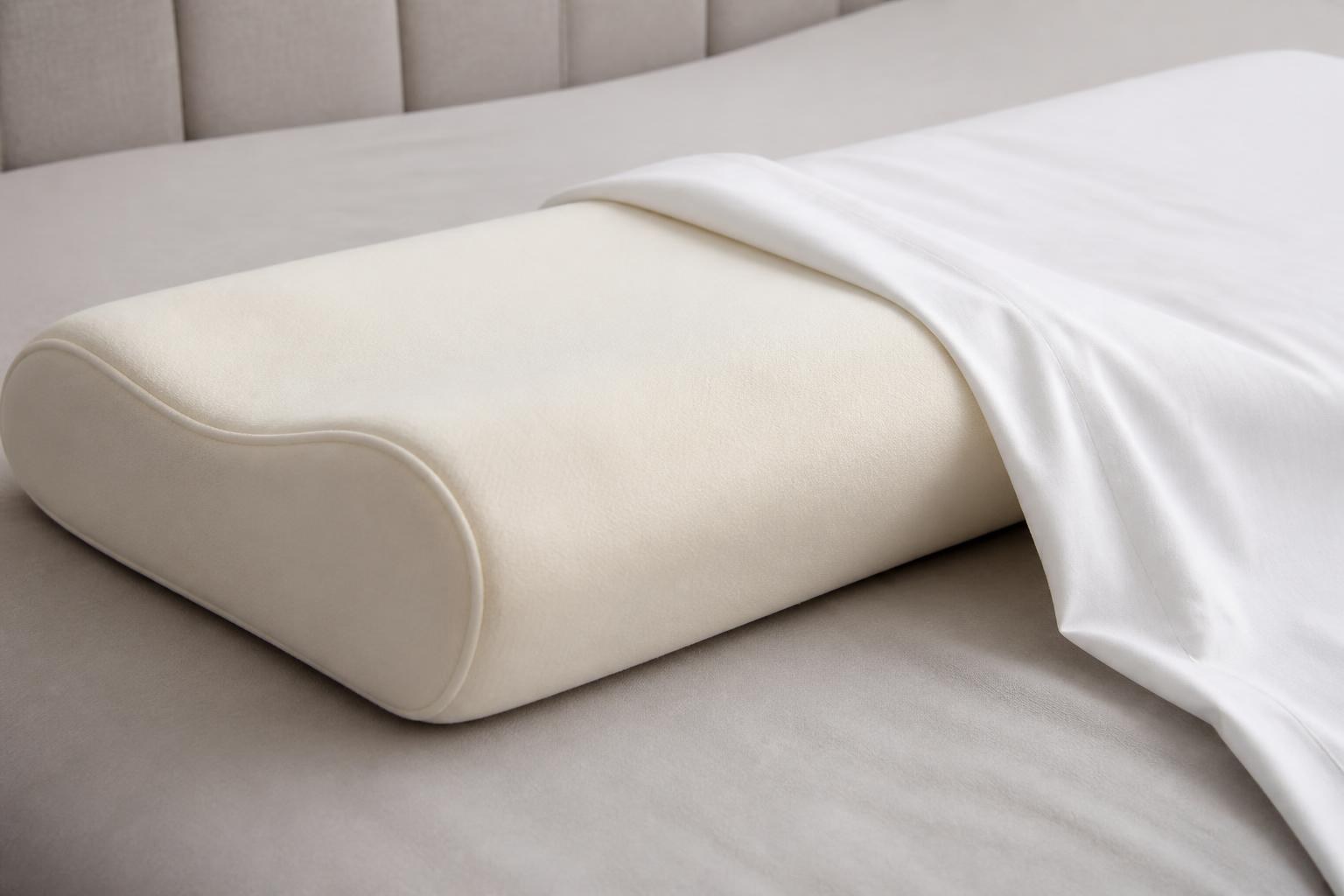
A contour pillow can feel very different from a flat rectangular pillow, and the pillowcase plays a larger role than many people expect. A case that is too tight may pull across the raised edges or slightly compress the pillow. One that is too loose can bunch beneath your cheek or allow the pillow to move inside it.
The right pillowcase for a contour pillow should protect the pillow without changing its basic shape. It should fit the highest and widest parts comfortably, feel pleasant against your skin and be easy to remove for washing. Fabric, seams, stretch and closure position all deserve attention.
For more practical detail, see our Signs You Need a New Pillow: How to Tell When Support Is Wearing Out.
For more practical detail, see our How Sleeping Position Can Influence Pillow Firmness.
For more practical detail, see our Persistent Neck Discomfort: When to Speak With a Professional.
This guide explains what to measure, which materials may suit different sleeping environments, how to assess a zip or envelope closure and how to check the finished fit at home.
Key takeaways
- Measure the contour pillow itself rather than relying only on labels such as standard, queen or king.
- Choose a case that follows the pillow’s curves without pulling tightly across raised support areas.
- Breathable, smooth fabrics are often more comfortable, especially for people who sleep warm or move frequently.
- Closures should sit away from the area supporting your head and neck.
- A good case should be practical to wash and should not alter the pillow’s height, firmness or intended shape.
Table of Contents
- Why fit matters with a contour pillow
- How to measure a contour pillow
- How to choose the fabric
- Assess closures, seams and surface details
- Care and maintenance considerations
- Fit check and common mistakes
- Frequently asked questions
Why fit matters with a contour pillow
Contour pillows may have raised side edges, a lower centre, curved wings or separate areas designed to accommodate the head and neck. These features are part of the pillow’s design. A pillowcase should hold the shape in place rather than flattening or distorting it.
A conventional pillowcase can work with some contour pillows, particularly when it is generously cut or made from a flexible fabric. However, excess material can gather beneath the neck or face. This may create pressure points, interfere with movement or make the pillow feel less stable.
A case that is too small presents the opposite problem. If it must be stretched forcefully over the highest contour, it may compress the foam or place constant tension on the seams. A useful rule is that the case should feel secure but not stretched to its limit.
After fitting, the pillow should still look recognisably like itself. The raised areas should remain raised, the lower centre should not be pulled flat and the fabric should lie reasonably smoothly across the sleeping surface.
How to measure a contour pillow
Size names are not completely consistent between manufacturers or countries. Measurements are therefore more dependable, especially when the pillow has an unusual profile or a pronounced neck roll.
Measure the key dimensions
Use a soft tape measure and avoid squeezing the foam. Check the pillow at its widest and longest points, then measure the highest contour rather than only the lower middle section. Record the following:
- Length: the distance across the pillow at its longest point.
- Width: the front-to-back measurement at the widest point.
- Height: the tallest raised edge or support section.
- Profile: any cut-outs, wings, curves or sharply raised sides that could affect the case’s shape.
If the pillow has a removable protective cover, decide whether that cover is intended to remain in place. In most cases, it should stay on unless the manufacturer says otherwise. Measure the pillow with the cover fitted because it contributes to the final bulk.
For reliable supporting context on this point, see Designer Pillowcase.
When comparing your measurements with a product listing, look for the case’s finished dimensions. A fabric or packaging measurement may describe the material before sewing and may not show how much room is available inside the completed case.
For more practical detail, see our Derila Ergo Discounts and Offers: What to Verify Before Buying.
To check current price, availability and purchase terms, see the Derila Ergo offer.
Allow for flexibility, not excessive looseness
A shaped pillowcase does not need to be several sizes larger. Too much spare fabric can move during the night and form folds under the head. Instead, look for a case with modest flexibility that can follow the curves without becoming baggy.
Knitted cotton, jersey and some cotton blends may be easier to fit over rounded edges than a rigid, tightly woven fabric. Stretch is useful only when the case still holds the pillow securely. If putting it on requires considerable force, the size or design is probably unsuitable.
How to choose the fabric
Fabric affects temperature, texture, washing and the way the case fits around the pillow. Your sleeping environment and personal preferences matter more than a material label on its own.
| Fabric or construction | Possible advantages | Points to consider |
|---|---|---|
| Cotton percale | Light, crisp and generally breathable | Can feel less smooth and may wrinkle more easily |
| Cotton sateen | Smooth surface with a soft drape | May feel warmer than lightweight percale |
| Knitted cotton or jersey | Flexible and easier to stretch over curved shapes | Quality varies, and some versions may pill with repeated washing |
| Bamboo-derived viscose | Smooth hand feel and comfortable drape | Care requirements vary, so check the label rather than assuming high-heat washing is suitable |
| Silk or satin-style fabric | Very smooth surface with low friction | May require delicate care and may not suit people who sleep warm |
If you tend to overheat, prioritise a breathable construction and avoid choosing solely for softness. A smooth surface can be helpful if you move your head often or dislike coarse fabric, but a slippery case may also shift more easily on some types of bedding.
People with sensitive skin may prefer a simple, washable fabric without heavy dyes, rough decoration or strongly fragranced finishing products. The most suitable choice is one that feels comfortable and can be cleaned consistently.
Regular laundering may also help reduce contact with household dust and dust-mite particles. MedlinePlus identifies bedding care as one part of a broader approach to managing exposure to household allergens. A pillowcase cannot remove every allergen, but a washable, practical design makes routine cleaning easier.
Assess closures, seams and surface details
The opening method affects both convenience and comfort. Common options include envelope flaps, zips, side openings and stretch openings. None is automatically best, but the closure should not sit beneath the part of the pillow supporting your head.
Envelope and stretch closures
An envelope case uses an overlapping flap to keep the pillow inside. It has no hard fastener and is usually straightforward to remove. Check that the flap folds toward the back or side rather than creating a ridge beneath your cheek.
A stretch opening can adapt neatly to curved edges and may be convenient for a pillow with raised sides. It should still be snug enough to prevent the case from rotating or sliding off. If the opening becomes loose after washing, it may no longer provide a stable fit.
Zip closures and seams
A zip can give a tidy fit, but it should be positioned along an outer or rear edge. A covered zip is preferable because it reduces contact between the fastener and your skin. Avoid any design that places a firm ridge directly beneath the head or neck.
Also check for thick piping, decorative embroidery, large labels and bulky internal seams. These details may be harmless on a flat pillow but more noticeable on a contour design because your head may rest closer to the edge. A plain sleeping surface is usually the safer choice.
Care and maintenance considerations
Because a pillowcase touches your face and hair for several hours at a time, convenient care is more useful than a fabric that looks attractive but is difficult to wash. Before buying, check whether the case can be machine-washed, tumble-dried or air-dried according to your routine.
- Follow the care label for water temperature, detergent and drying.
- Close zips and fasteners before washing to reduce snagging.
- Use a mild detergent if fragranced products irritate your skin.
- Avoid bleach or harsh treatments unless the manufacturer specifically permits them.
- Make sure the case is fully dry before putting it back on the pillow.
Do not treat a foam contour pillow like an ordinary washable textile pillow. Memory foam and similar materials commonly require spot-cleaning, ventilation or a removable cover that can be washed separately. The pillow’s own care instructions should take priority.
For reliable supporting context on this point, see Allergies, asthma, and dust: MedlinePlus Medical Encyclopedia.
Utah State University Extension’s guidance on pillowcase construction also illustrates why measurements, seam allowances and finished dimensions matter. The same principle applies to a ready-made case: the nominal size is useful only when you understand how it relates to the actual interior fit.
Fit check and common mistakes
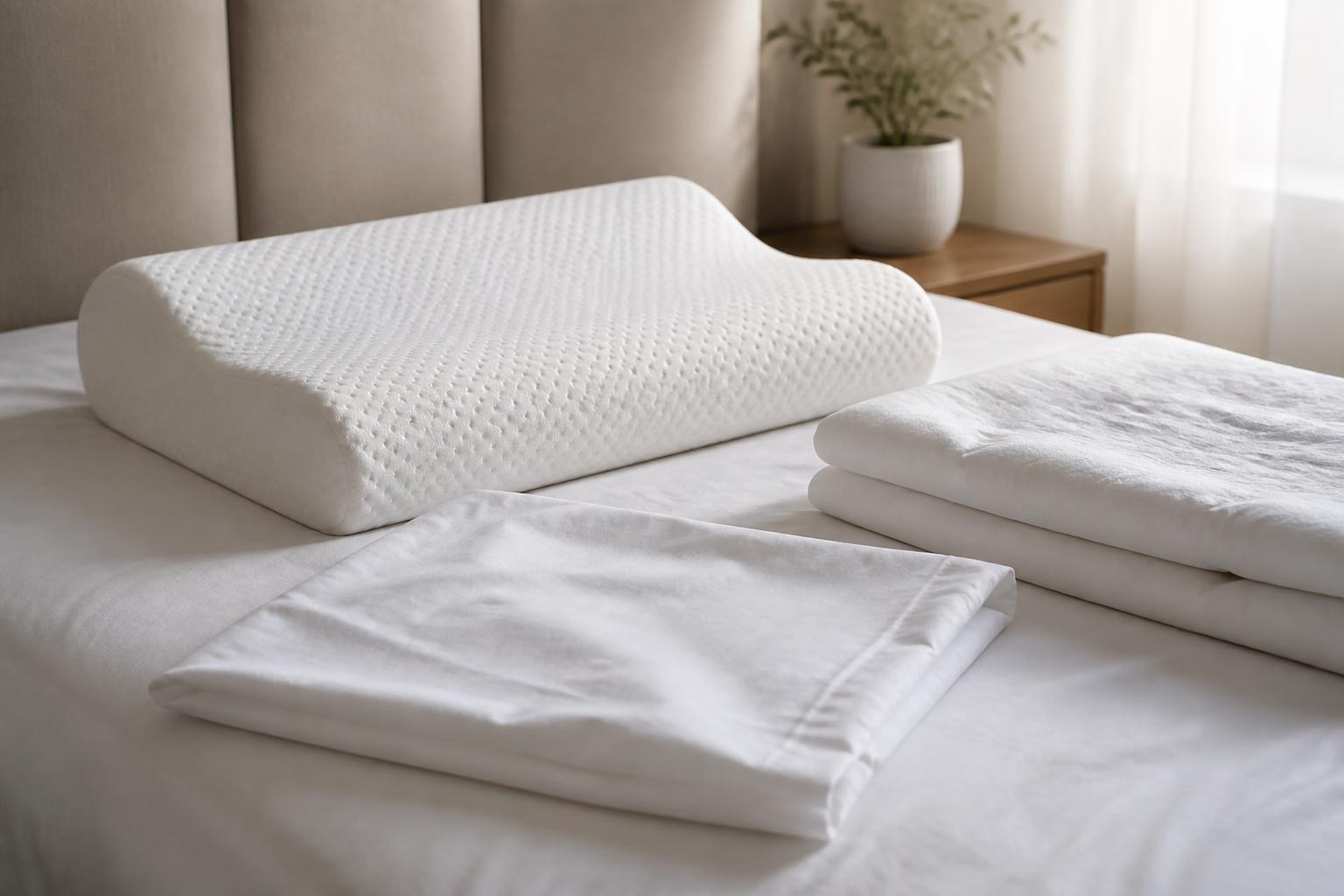
Once the case is fitted, lie down in your usual sleeping position for a few minutes. Check whether the contours remain in their intended positions and whether the case changes the pillow’s feel. The fabric should not pull sharply across the highest area, and there should be no zip, seam or fold under your head.
Turn your head gently and change position if you are a combination sleeper. The case should not rotate, slide away from the pillow or gather around the neck. If the pillow feels noticeably higher, flatter or firmer with the case fitted, remove it and compare the two profiles.
Several common buying mistakes are easy to avoid:
- Buying by size name alone: standard and king labels do not describe every contour pillow accurately.
- Choosing the tightest possible case: a neat appearance is not worth compressing the raised support areas.
- Ignoring closure position: a zip or thick overlap can become a pressure point if it sits in the wrong place.
- Allowing too much spare fabric: excess material can bunch beneath the cheek or neck.
- Removing the original cover without checking: the supplied cover may protect the foam or be part of the intended construction.
Replace the case when it becomes thin, permanently stretched, misshapen, difficult to clean or damaged around the seams. You may also need a different case after changing to a pillow with a different height or profile. A case that fitted one contour design should not be assumed to fit another.
Frequently asked questions
Can I use a standard pillowcase for a contour pillow?
Sometimes. It may work if the case is roomy enough, flexible and free from folds beneath your head. Measure the contour pillow first and check that the case does not compress its raised edges.
Is stretch fabric better for a contour pillowcase?
Stretch fabric can make fitting easier and may follow curved edges more neatly. It is not automatically better, though. Consider breathability, durability, washing instructions and whether the case remains secure after repeated laundering.
Where should the zip be on a contour pillowcase?
The zip should sit along the rear or outer edge, away from the area supporting your head and neck. A covered zip is preferable because it reduces the chance of a hard edge touching your skin.
How can I tell if a pillowcase is too tight?
Warning signs include difficulty putting it on, sharp tension across the raised contours, a changed pillow profile or foam that feels compressed. Remove the case and compare the pillow before deciding whether a larger or more flexible design is needed.
How often should I wash a contour pillowcase?
Follow the care label and choose a schedule that suits your household. Regular washing is sensible because the case contacts your face and hair. People who sweat heavily, have allergies or share the bed with pets may prefer to wash it more often.