Signs You Need a New Pillow: How to Tell When Support Is Wearing Out
A pillow can look perfectly usable long after it has stopped providing consistent support. The filling may flatten gradually, the cover may lose its shape, or your sleeping preferences may change without you noticing. Over time, you may begin adjusting the pillow during the night, waking with stiffness or feeling more comfortable when you sleep away from home.
These changes do not automatically mean that your pillow is responsible for every discomfort. Sleep position, mattress feel, stress, activity and health can all influence how you feel in the morning. Still, recognizing the signs you need a new pillow can help you decide whether your current one is no longer a good fit.
For more practical detail, see our New Pillow Smell: What to Consider Before Sleeping on It.
For more practical detail, see our Best Pillow Characteristics for Back Sleepers: A Practical Guide.
For more practical detail, see our Persistent Neck Discomfort: When to Speak With a Professional.
For more practical detail, see our How Sleeping Position Can Influence Pillow Firmness.
This guide explains what to inspect, how to test your pillow at home and what to consider when choosing a replacement.
To check current price, availability and purchase terms, see the Derila Ergo offer.
Key Takeaways
- A pillow may need replacing when it has lost its shape, developed permanent lumps or no longer keeps your head comfortably supported.
- Morning neck or shoulder stiffness can be a sign of poor pillow fit, although it can have many other causes.
- Visible stains, persistent odor, damaged materials and allergy-related irritation are practical reasons to consider a replacement.
- Your ideal pillow can change after a new mattress, a change in sleeping position or changes in shoulder and body shape.
- Choose a replacement based on height, firmness, shape, material and care requirements rather than appearance alone.
Table of Contents
- You Wake With Repeated Neck or Shoulder Discomfort
- The Pillow Has Lost Its Shape or Support
- Your Sleeping Position or Mattress Has Changed
- You Can See Physical Wear and Hygiene Problems
- You Keep Adjusting the Pillow During the Night
- Simple Tests to Assess Your Current Pillow
- What to Look for in a Replacement Pillow
- When Pillow Replacement Is Not the Whole Answer
- Frequently Asked Questions
You Wake With Repeated Neck or Shoulder Discomfort
One of the most noticeable signs you need a new pillow is a pattern of discomfort that appears after sleeping and improves as you move through the day. You might wake with a stiff-feeling neck, tight shoulders or the sense that your head was positioned awkwardly during the night.
A pillow that is too high can push the head forward or tilt the neck. One that is too low may allow the head to drop toward the mattress. For side sleepers, insufficient height can leave the neck angled downward because the shoulder creates more space between the head and bed. Back sleepers often need less height, while stomach sleepers commonly feel more comfortable with a lower, more flexible pillow.
Morning discomfort is not proof that the pillow is the cause. However, if it happens regularly and your pillow has also become flat, lumpy or unusually firm, replacing it is a reasonable step. If neck pain is persistent, severe or accompanied by other symptoms, consult a qualified healthcare professional. The NHS advises seeking medical guidance for ongoing or concerning neck symptoms rather than relying only on changes to bedding.
The Pillow Has Lost Its Shape or Support
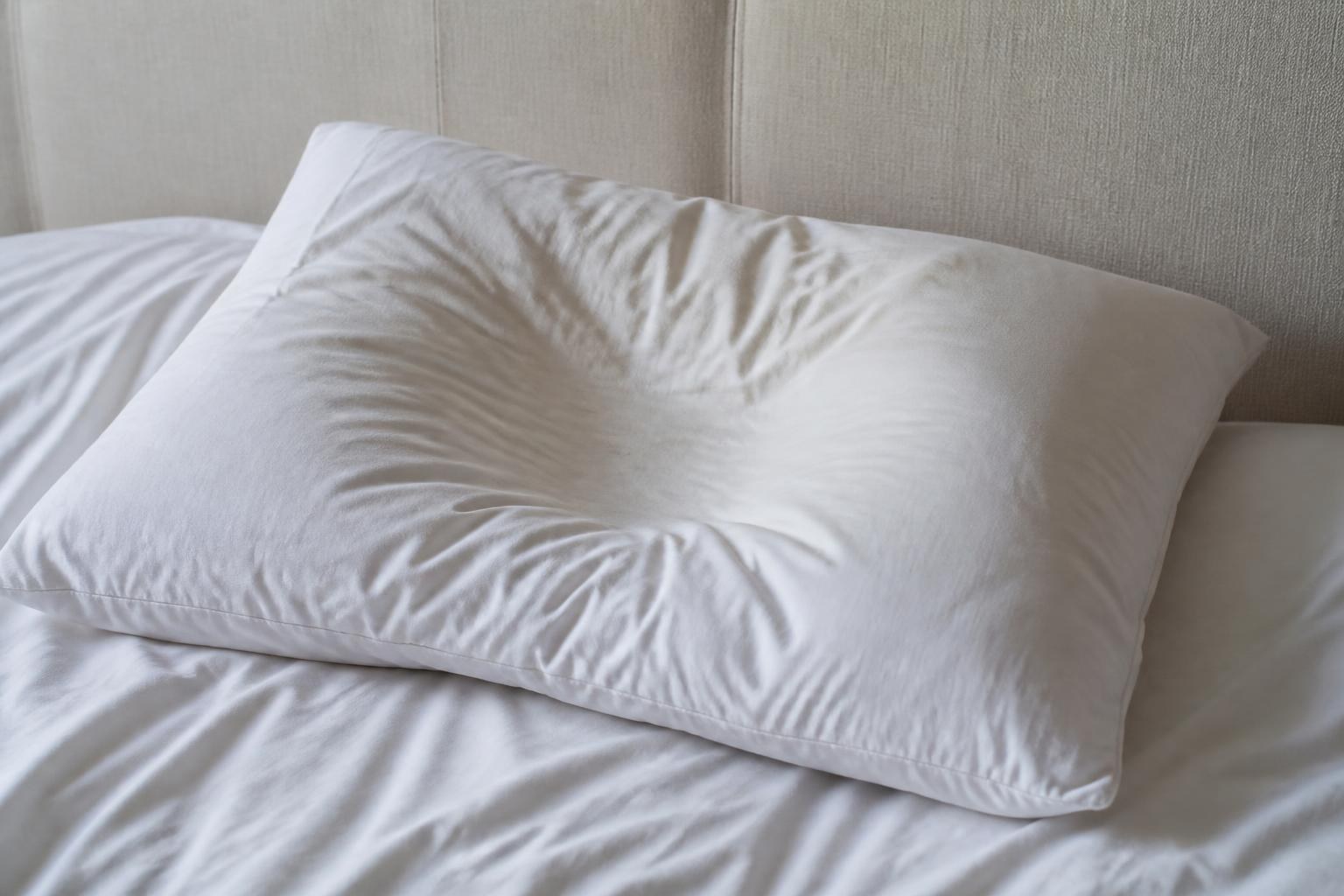
Most pillows change over time. Fibers compress, foam can lose resilience and natural fillings may shift. A pillow that once supported your head evenly may develop a hollow in the middle or collapse at the edges.
Look for these changes:
- A permanent dip that does not recover after the pillow is fluffed or left unused.
- Lumps, uneven sections or areas that feel noticeably denser than others.
- An edge that collapses when you place your head near it.
- A pillow that feels much thinner than it did when new.
- Foam that has become brittle, cracked or slow to regain its original shape.
Temporary compression is not always a problem. Some pillows are designed to soften or conform under the head. The concern is a lasting loss of structure that makes it difficult to maintain a comfortable position throughout the night.
Folding or rolling a pillow may briefly restore its height, but this can hide rather than solve the problem. If you have to reshape it every night to create a supportive surface, it may be past its useful life.
Your Sleeping Position or Mattress Has Changed
A pillow that worked well last year may not suit you after a change in sleeping habits. You may begin sleeping on your side because of a new routine, spend more time on your back or alternate between several positions. Each position changes the amount of space between your head and the mattress.
Your mattress also matters. A softer mattress allows the shoulder to sink farther, which can reduce the pillow height needed by some side sleepers. A firmer mattress may leave the shoulder higher, increasing the space the pillow needs to fill. A new mattress can therefore make an old pillow feel too high or too low even if the pillow itself has not changed.
For reliable supporting context on this point, see Sleeping positions that reduce back pain.
Body changes can affect fit as well. Changes in shoulder width, body weight, muscle development or mobility may alter how a pillow feels. The goal is not to find a universally perfect height, but to find a pillow that supports your current sleeping position without forcing the head noticeably up, down or forward.
You Can See Physical Wear and Hygiene Problems
Not every worn pillow needs immediate replacement, but visible deterioration should not be ignored. Pillows collect skin oils, perspiration and product residue even when they are protected by a pillowcase. Over time, the cover may become thin, stained or difficult to clean properly.
Consider replacing the pillow when you notice:
- Persistent staining or odor that remains after appropriate cleaning.
- A torn cover, exposed filling or broken seams.
- Moisture damage, mold-like spotting or signs of contamination.
- Filling escaping through holes or collecting unevenly inside the cover.
- Dust or irritation that seems to worsen when you use the pillow.
Always follow the manufacturer’s care instructions. Memory foam, fiber-filled and latex pillows often require different cleaning methods, and soaking some materials can cause permanent damage. A removable, washable cover can extend the practical life of a pillow, but it cannot restore a deteriorated inner core.
You Keep Adjusting the Pillow During the Night
Frequent adjustment is another useful clue. You may fold the pillow, place an arm beneath it, push filling back into the corners or turn it repeatedly to find a comfortable side. Occasional movement is normal, but a nightly struggle suggests that the pillow is no longer providing stable support.
Pay attention to what you are trying to correct. If you keep folding the pillow, it may be too low or too soft. If you push it away from your neck, it may be too high or too firm. If you search for a dense section, the filling may have become uneven. These observations can guide your next choice more effectively than simply buying a pillow described as soft or supportive.
It is also worth checking the rest of the sleep setup. A pillow can feel unstable if the mattress is sagging, the bed base is uneven or the pillowcase is too tight and compresses the filling. Fixing one of these issues may extend the life of an otherwise sound pillow.
Simple Tests to Assess Your Current Pillow
The visual and recovery test
Remove the pillowcase and place the pillow on a flat surface. Check whether it sits evenly and whether one side is visibly lower. Press the center and several edges, then watch how quickly the material recovers. Foam should generally regain its shape according to its design, while fiber-filled pillows may need gentle fluffing. Permanent dents or weak edges suggest declining support.
The alignment check
Ask someone to take a side-on photograph while you lie in your normal sleeping position, or use a mirror if practical. Your head should not appear markedly tilted upward or downward in relation to your neck and upper back. This is only a general comfort check, not a medical assessment, but it can reveal an obviously unsuitable height.
The position-and-feeling log
For three or four nights, record your sleeping position, whether you adjusted the pillow and how your neck and shoulders felt on waking. Look for a pattern rather than judging one night. A pillow that feels acceptable for ten minutes but becomes uncomfortable after several hours may not be providing consistent support.
What to Look for in a Replacement Pillow
Once you decide your current pillow is no longer suitable, focus on fit rather than a fixed replacement schedule. The right choice depends on your position, shoulder width, mattress feel and preference for a softer or more structured surface.
| Factor | Questions to ask |
|---|---|
| Height | Does it fill the space between your head and mattress without tilting your neck? |
| Firmness | Does it remain supportive without feeling hard or pushing your head forward? |
| Shape | Would a traditional shape, contour or adjustable design suit your position and movement? |
| Material | Do you prefer the conforming feel of foam, the flexibility of fiber or another material? |
| Breathability | Does the construction allow enough airflow for your comfort? |
| Care | Can the cover be removed and cleaned, and are the care instructions practical for you? |
Side sleepers often need enough loft to fill the shoulder-to-head gap, while back sleepers may prefer a lower profile that supports the natural curve of the neck without lifting the head too far. Combination sleepers may benefit from a shape that remains comfortable when changing positions.
For reliable supporting context on this point, see Neck pain.
Contour pillows can provide different support zones for the head and neck, but their shape is not automatically suitable for everyone. If you are considering an ergonomic design, check its dimensions, material, firmness and intended sleeping positions. Allow time to adjust, but do not ignore persistent discomfort.

When Pillow Replacement Is Not the Whole Answer
A new pillow can improve the fit of your sleep setup, but it cannot address every source of discomfort. A mattress that sags, an unsuitable sleeping position, daytime muscle tension or an underlying health issue may continue to affect how you feel in the morning.
Seek professional advice if pain persists despite reasonable changes, becomes severe, follows an injury or is accompanied by symptoms such as weakness, numbness, fever or difficulty moving. The Mayo Clinic’s guidance on sleeping positions also emphasizes that positioning can influence comfort, but sleep setup advice should not replace medical assessment when symptoms continue.
If you have no concerning symptoms, make one change at a time where possible. Adjust the pillow, keep the rest of your routine steady and evaluate comfort over several nights. This makes it easier to understand whether the replacement is helping or whether another part of the sleep environment needs attention.
Frequently Asked Questions
How often should you replace a pillow?
There is no universal replacement date. Replace a pillow when it no longer keeps its shape, becomes unhygienic, feels damaged or stops providing comfortable support. The material, quality, care and frequency of use all affect its useful life.
Can a bad pillow cause neck pain?
An unsuitable pillow can influence head and neck position and may contribute to discomfort for some people. However, neck pain has many possible causes. Persistent or severe symptoms should be discussed with a healthcare professional.
How do you know if a pillow is too high?
You may notice that your head is pushed forward, your neck feels bent or you need to move the pillow away from your shoulders. A side-on alignment check can help identify an obvious height problem, although comfort and professional advice should guide the final decision.
Is a lumpy pillow always ready for replacement?
Not always. Some pillows can be redistributed or fluffed successfully. If lumps are permanent, the filling cannot be spread evenly or the pillow no longer supports your head comfortably, replacement is usually more practical.
The clearest signs you need a new pillow are usually a combination of changes: lasting loss of shape, repeated morning discomfort, nightly adjustment and visible wear. Assess the pillow as part of your complete sleep setup, then choose a replacement that matches your position, body shape, mattress and comfort preferences.