New Pillow Smell: What to Consider Before Sleeping on It
Opening a new pillow can come with an unexpected odour. It may smell faintly chemical, plasticky, earthy or like packaging. For some people, the scent fades quickly. For others, it is strong enough to make the pillow uncomfortable to use on the first night.
A new pillow smell is usually related to the materials, packaging or manufacturing process rather than a sign that something is wrong. Foam pillows, synthetic fills, protective coverings and sealed packaging can all contribute. Still, the sensible approach is not to ignore a strong or irritating odour: give the pillow time to air out, follow the care instructions and pay attention to how you feel around it.
For more practical detail, see our How to Choose a Pillowcase for a Contour Pillow.
To check current price, availability and purchase terms, see the Derila Ergo offer.
For more practical detail, see our Best Pillow Characteristics for Back Sleepers: A Practical Guide.
For more practical detail, see our Signs You Need a New Pillow: How to Tell When Support Is Wearing Out.
For more practical detail, see our How Sleeping Position Can Influence Pillow Firmness.
This guide explains what may cause the smell, how to reduce it without damaging the pillow and when it makes sense to contact the seller or a healthcare professional.
For more practical detail, see our Persistent Neck Discomfort: When to Speak With a Professional.
Key takeaways
- A new pillow smell can come from foam, textile treatments, packaging or compounds released into the surrounding air.
- Unpack the pillow in a well-ventilated room and allow it to air out according to the manufacturer’s instructions.
- Do not mask the odour with perfume, essential oils or harsh cleaning products.
- A smell that remains strong, worsens or causes irritation is a reason to pause use and contact the manufacturer or retailer.
- People with asthma, fragrance sensitivity or other respiratory concerns may prefer extra ventilation and a longer airing period.
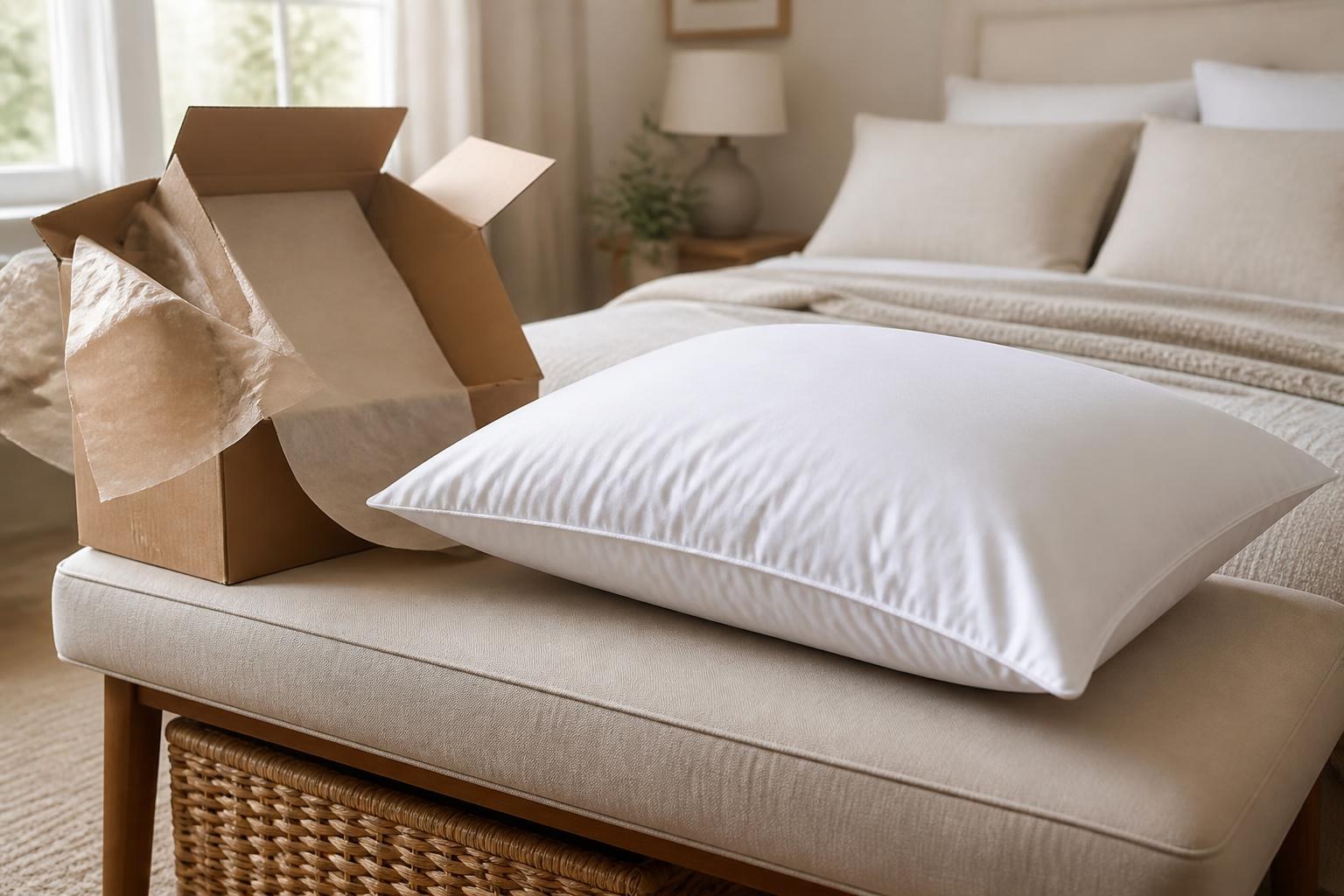
Table of Contents
- Why do new pillows smell?
- Is a new pillow smell normal?
- How to air out a new pillow
- What not to do when removing the smell
- When should you wait before sleeping on it?
- When to contact the seller or stop using the pillow
- How to choose a pillow if odour matters to you
- Frequently asked questions
Why do new pillows smell?
The smell of a new pillow can have several sources, and the exact cause depends on its materials and packaging. A pillow containing polyurethane or other types of foam may release a noticeable odour when first removed from a sealed bag. This is sometimes called off-gassing. Synthetic fabrics, adhesives, dyes, finishes and plastic packaging may also contribute to the scent.
Packaging can make the smell seem stronger because the pillow may have been enclosed for days or weeks with little air movement. Compression packaging can also trap odours inside the material until the pillow expands and is exposed to fresh air.
The US Environmental Protection Agency explains that volatile organic compounds, or VOCs, can affect indoor air quality and may be emitted by many household products and materials. That does not mean every new pillow is hazardous, nor does smell alone tell you the level or identity of any emission. Odour is simply a reason to ventilate the room and follow the product’s instructions rather than placing the pillow straight on your bed.
Some smells are less about off-gassing and more about storage. A pillow may pick up a warehouse, cardboard or plastic scent. A damp or musty smell, however, deserves more caution because it can indicate exposure to moisture during storage or transport.
Is a new pillow smell normal?
A mild, temporary smell can be normal for a newly manufactured or newly packaged pillow. It should generally become less noticeable with ventilation and time. The duration varies according to the pillow’s construction, the packaging, room temperature, airflow and your own sensitivity to odours.
There is no universal number of hours that applies to every pillow. Instead of relying on a fixed timetable, check whether the smell is clearly fading and whether the product looks and feels as described by the manufacturer. A pillow that expands normally and gradually loses its packaging scent is different from one with a persistent, harsh or unusual odour.
For reliable supporting context on this point, see Volatile Organic Compounds' Impact on Indoor Air Quality.
Remember that “normal” does not have to mean comfortable for you. Even a mild smell may bother someone who is sensitive to fragrances or certain materials. If the odour interferes with sleep, causes a headache, irritates your throat or makes breathing feel uncomfortable, do not force yourself to use the pillow just because it is new.
How to air out a new pillow
Ventilation is usually the simplest first step. The aim is to replace trapped packaging air with fresh air while keeping the pillow clean and dry.
1. Read the care and unpacking instructions
Before removing tags or washing a cover, check the manufacturer’s instructions. Some pillows have a removable washable cover, while the inner pillow may not be washable. Instructions may also specify how long a compressed pillow needs to regain its shape or whether it should be kept away from direct heat.
2. Open the packaging in a ventilated area
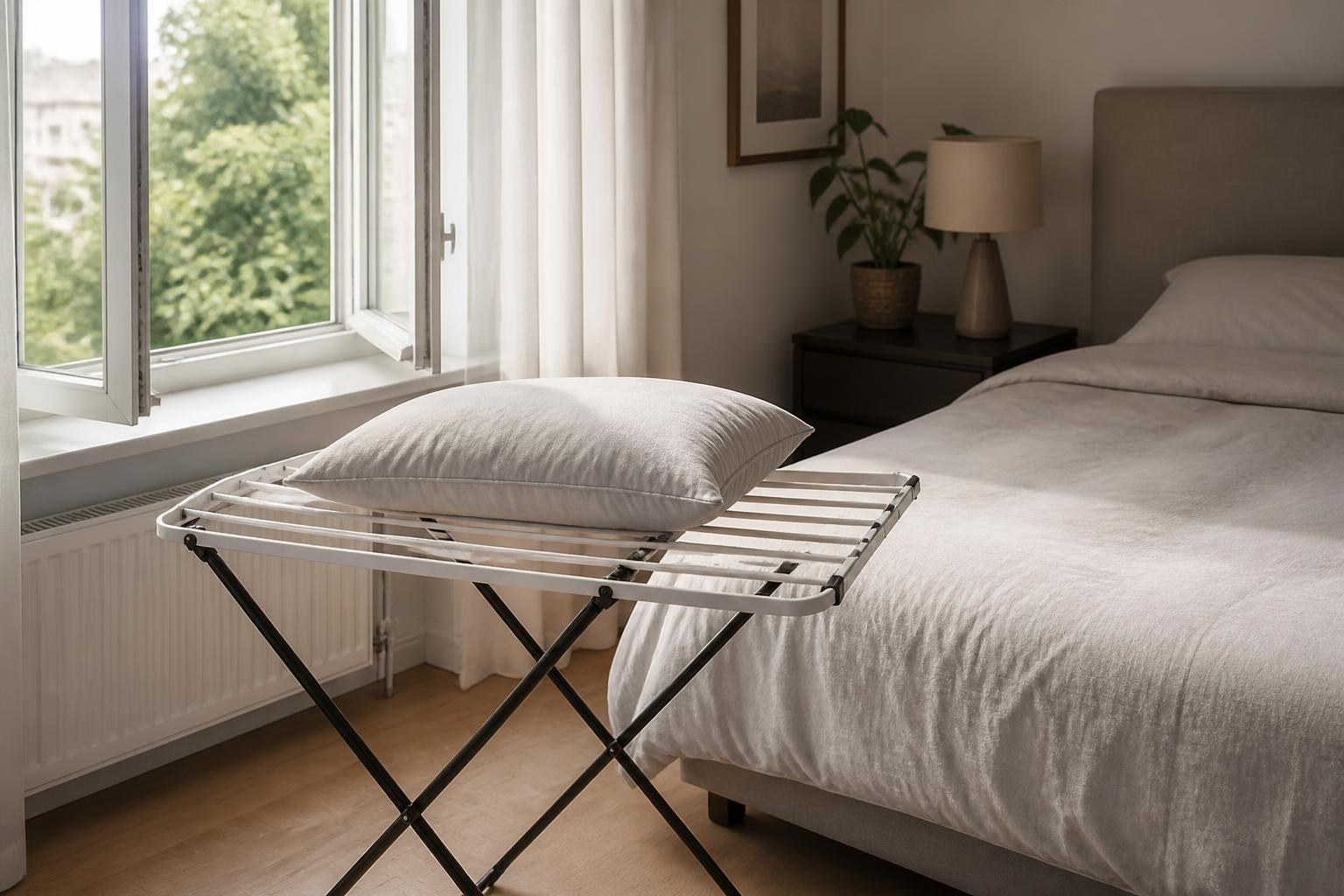
Choose a dry room with good airflow, preferably near an open window. If outdoor conditions are suitable, you may place the pillow in a clean, sheltered area outside for a short period. Keep it away from rain, damp surfaces, smoke, strong fragrances and direct sunlight unless the manufacturer specifically allows sun exposure.
3. Give the pillow space
Lay the pillow flat or position it as directed, with air able to circulate around it. Do not leave it tightly folded, under bedding or inside another bag. If it arrived compressed, gently allow it to expand rather than aggressively pulling or twisting it.
4. Turn it occasionally
After several hours, turn or reposition the pillow if the care instructions permit. This can expose different surfaces to moving air. Avoid vigorous shaking if the filling could be displaced or damaged.
5. Check the smell before putting on a pillowcase
A pillowcase can reduce direct contact with the material, but it may also trap the odour. Check the pillow first. If the smell is still strong, continue airing it out rather than making the bed and hoping the scent disappears overnight.
| Situation | Practical response |
|---|---|
| Mild packaging smell that is fading | Continue ventilating and follow the care instructions. |
| Strong smell in a closed room | Move the pillow to a well-ventilated, dry area. |
| Musty or damp smell | Pause use and contact the seller for advice. |
| Odour causes irritation | Stop using it, get fresh air and seek advice if symptoms persist. |
What not to do when removing the smell
Trying to eliminate an odour quickly can create new problems. Do not spray perfume, air freshener or essential oils directly onto the pillow. These products can add their own fragrance, stain the fabric or cause irritation. They may also make it harder to identify the original smell.
Do not wash or soak the entire pillow unless the instructions clearly say that it is washable. Foam can retain moisture, lose its shape or take too long to dry. A damp interior may create a more persistent musty odour. If only the cover is washable, remove and clean the cover as directed while keeping the inner pillow dry.
It is also best to avoid hairdryers, radiators, heaters and prolonged intense sunlight. Excessive heat may affect foam, fibres, adhesives or the pillow’s shape. Fresh air and patience are safer than using heat to speed up the process.
Finally, do not place the pillow in a child’s or pet’s sleeping area while it still has a strong smell. Ventilation is especially useful when several people share a bedroom or when someone in the household is sensitive to odours.
When should you wait before sleeping on it?
Wait if the smell is strong enough to distract you, remains concentrated inside the pillowcase or has not started to fade after a reasonable airing period. You should also wait if the pillow feels unusually damp, sticky or warm after unpacking, or if it has not returned to its intended shape.
There is no benefit in enduring an unpleasant first night. A new pillow is meant to improve sleeping comfort, and a strong odour can make it harder to relax. Use your existing pillow temporarily if it is still supportive and comfortable, while the new one airs out.
People with asthma, known fragrance sensitivity or respiratory concerns may wish to be more cautious. Keep the room ventilated, avoid direct exposure and consider asking a healthcare professional for individual advice if particular materials or odours have caused problems before.
When to contact the seller or stop using the pillow
Contact the retailer or manufacturer if the smell is unusually strong, does not gradually improve, resembles dampness or solvent, or is accompanied by visible staining, wetness, damage or a damaged package. Ask about the material, recommended airing procedure and whether the product may have been exposed to moisture.
For reliable supporting context on this point, see Consumer Connection: Winter 2017.
Stop using the pillow if it causes burning eyes, throat irritation, coughing, wheezing, skin irritation, dizziness or another concerning reaction. Move away from the source and get fresh air. If symptoms are severe, do not improve or affect breathing, seek appropriate medical help promptly.
A product return or replacement may be appropriate if the pillow does not match its description or remains unusable because of its odour. Keep the packaging, order details and photographs of any visible issue until the matter is resolved. Avoid washing or altering the pillow before contacting the seller if doing so could affect the return terms.
How to choose a pillow if odour matters to you
If you are particularly sensitive to smells, investigate the product before ordering. Look for clear information about the filling, cover, packaging, washing instructions and expected expansion. A removable, washable cover may be useful, although it will not necessarily remove an odour from the inner pillow.
Check the retailer’s current policy for returns and contact details. A transparent seller should be able to explain what materials are used and how the pillow should be aired after delivery. Be cautious of descriptions that make broad safety promises without identifying the materials or care requirements.
Your sleeping position and support needs still matter. A pillow that has little odour but is too high, too low or too soft may be less comfortable than one that needs a short airing period. Once the smell has faded, assess whether your head and neck feel reasonably aligned and whether the shape suits the way you sleep. Pillow choice should combine material preferences, odour tolerance, fit and support rather than focusing on one feature alone.
For practical maintenance, use a breathable pillowcase, keep the pillow dry and follow the washing instructions. Regular airing after use can help prevent stale smells caused by moisture, but do not leave the pillow in a damp room or store it while it is not fully dry.
Frequently asked questions
How long does new pillow smell usually last?
There is no fixed timeframe for every pillow. A mild packaging or material smell should generally become less noticeable with ventilation. If it is not fading, remains harsh or makes you feel unwell, stop using the pillow and contact the seller.
Is it safe to sleep on a pillow that smells new?
A mild, fading smell is commonly managed by airing the pillow before use. However, you do not need to sleep on it while the odour is strong or irritating. Follow the manufacturer’s instructions and wait until the pillow is comfortable for you.
Can I wash a new pillow to remove the smell?
Only wash the pillow if the care label or manufacturer expressly allows it. Many inner pillow materials should not be soaked. A removable cover may be washable even when the pillow itself is not.
Does a strong smell mean the pillow is toxic?
Smell alone cannot identify a substance or determine its risk. It can signal that ventilation is needed, but it is not a reliable safety test. If the odour is persistent or causes symptoms, pause use and ask the manufacturer for material information or seek professional advice.
A new pillow should become a comfortable part of your sleep routine, not something you have to tolerate. Air it out carefully, avoid harsh attempts to mask the smell and treat persistent odour or irritation as a reason to ask questions before continuing to use it.